Liz Shepherd
Interview of Liz Shepherd by Sara Jones
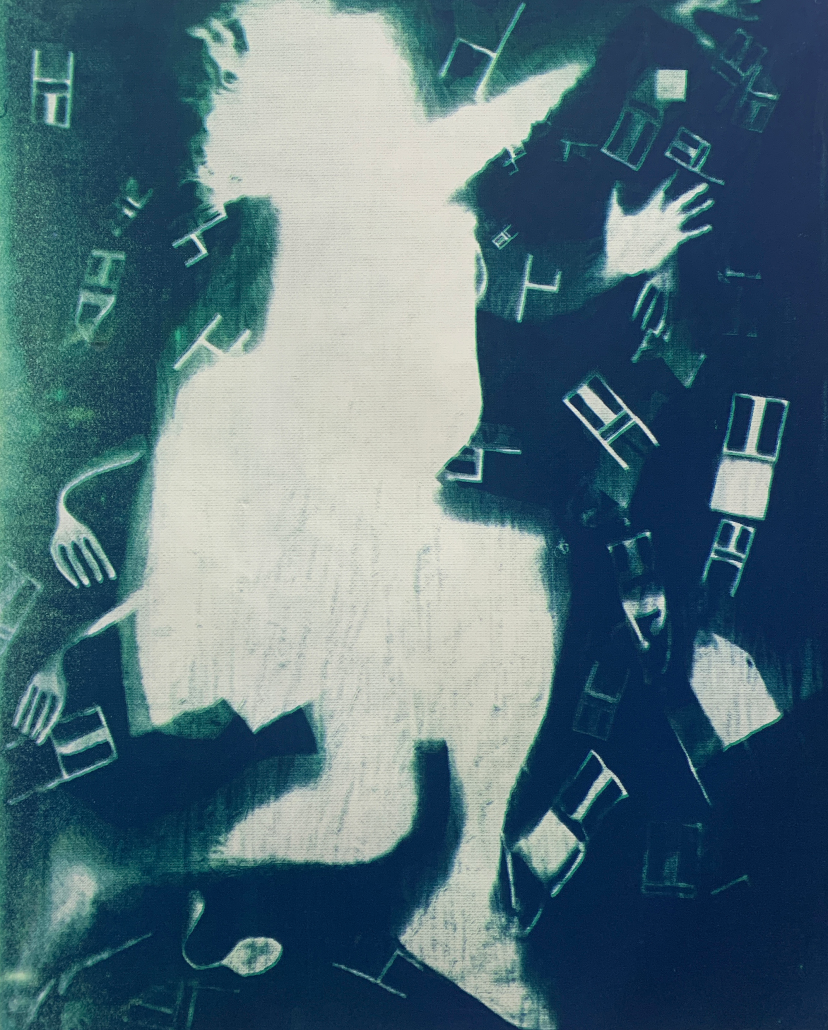
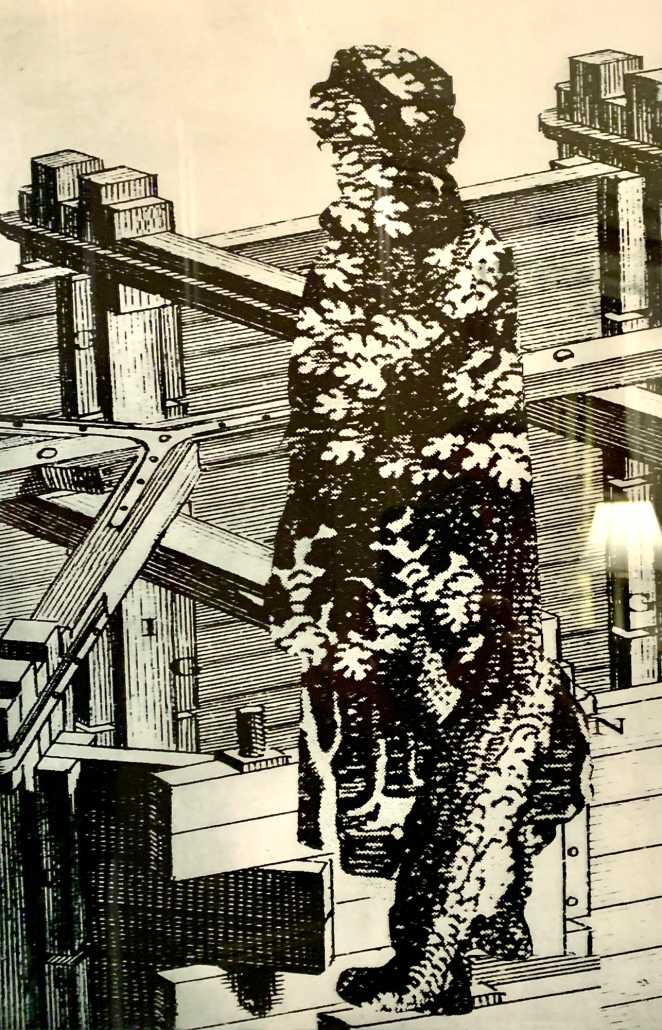
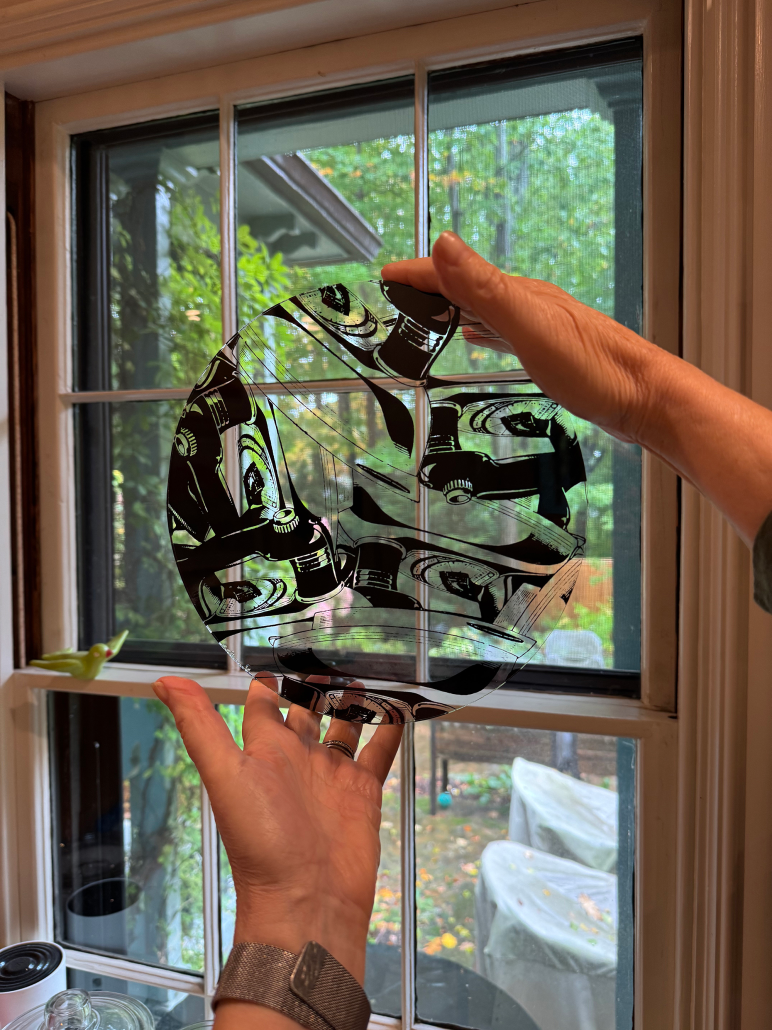
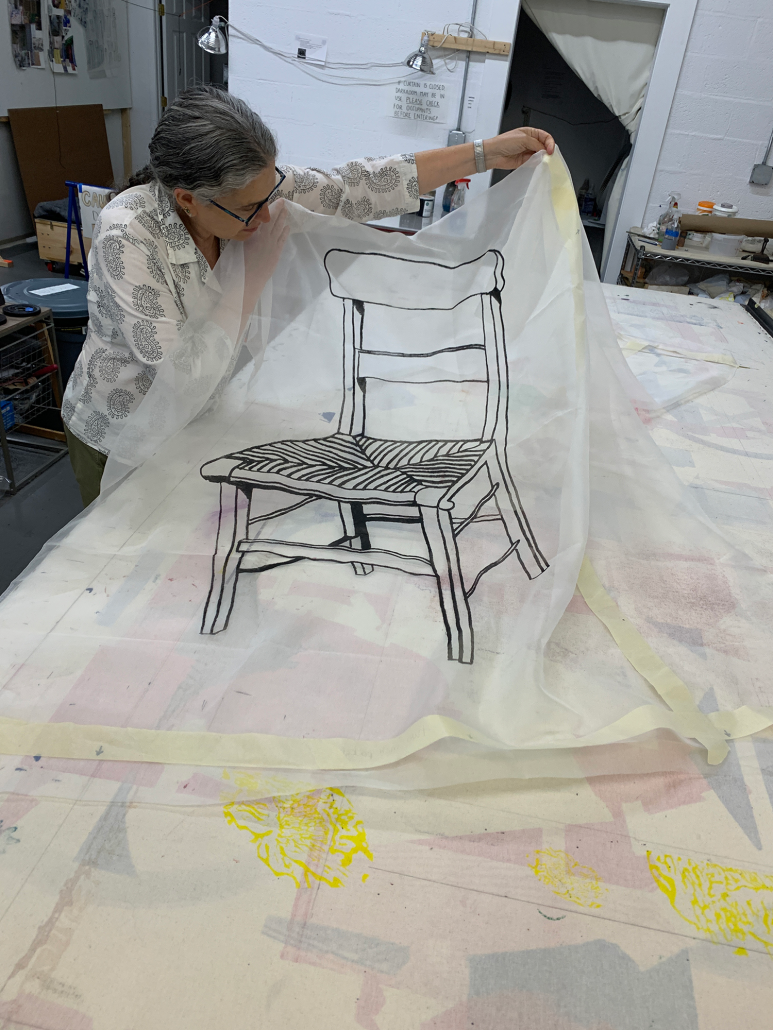
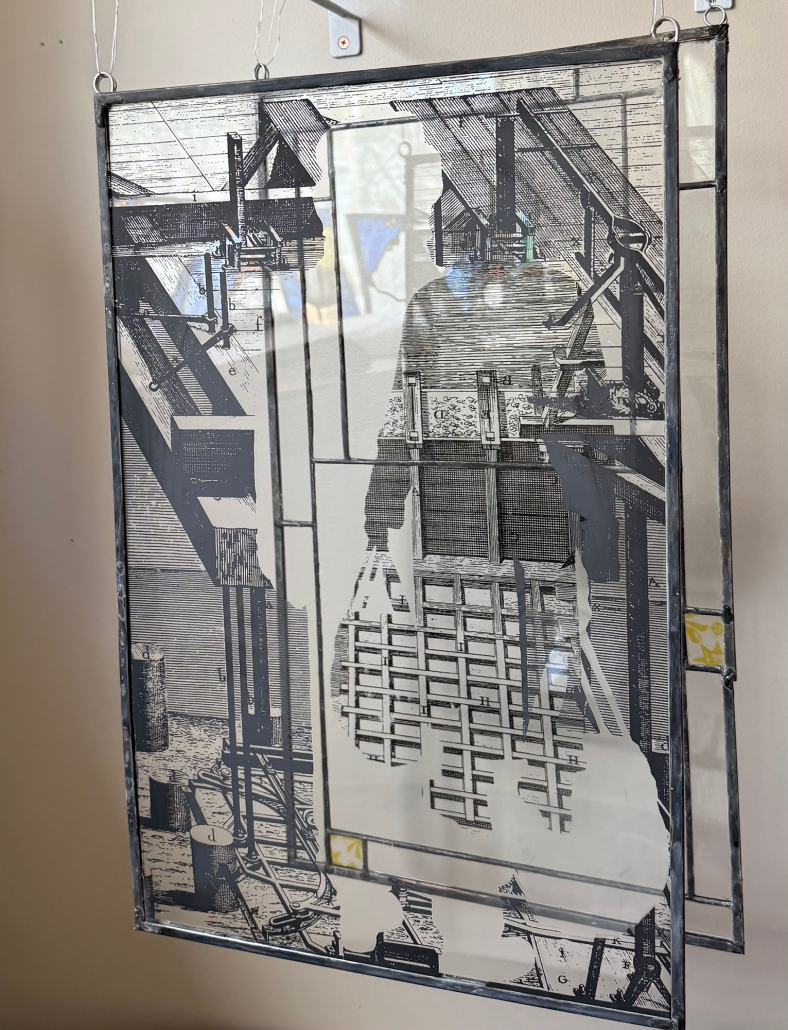
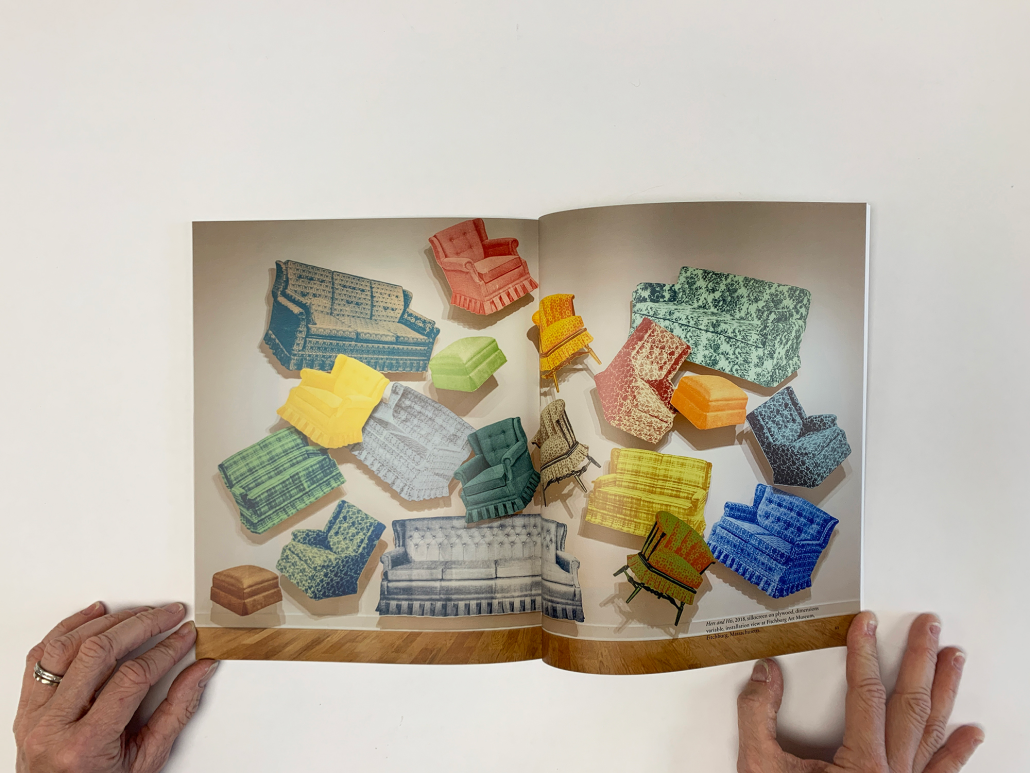
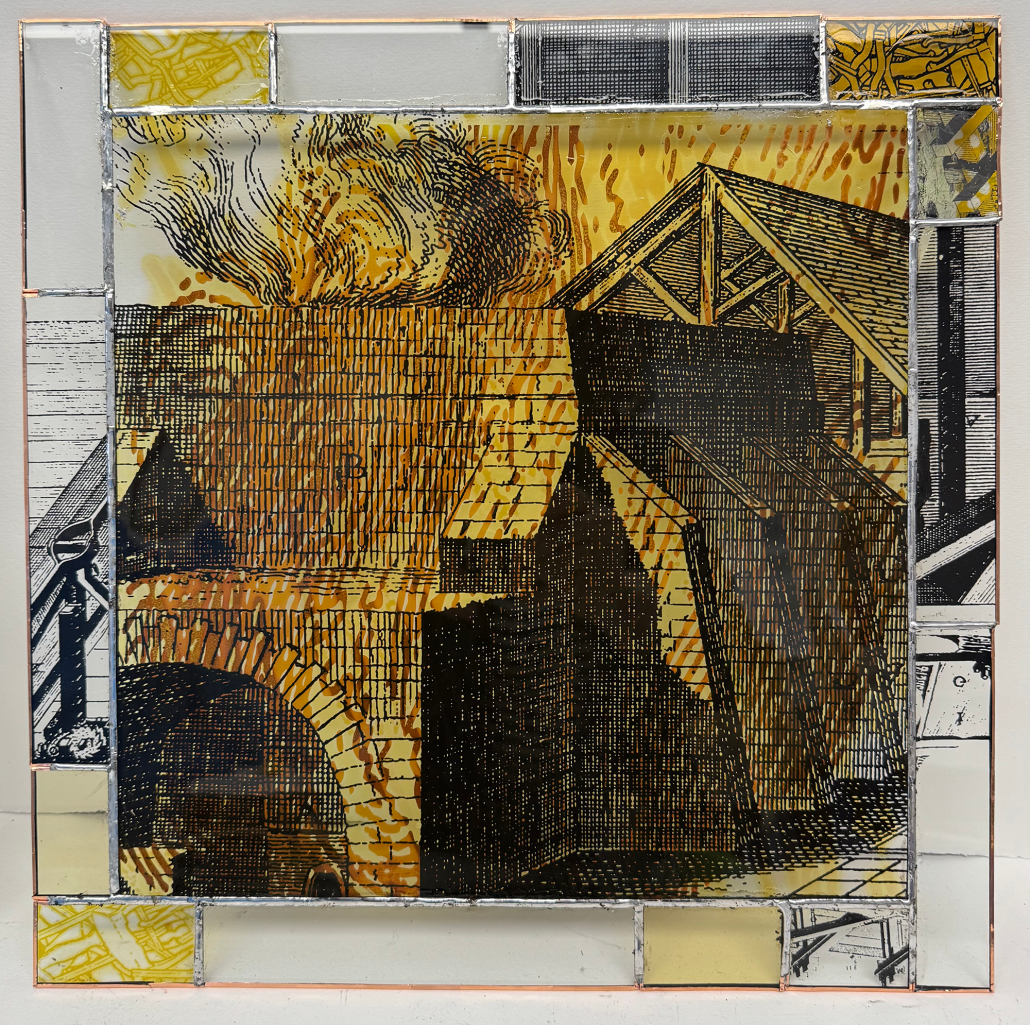
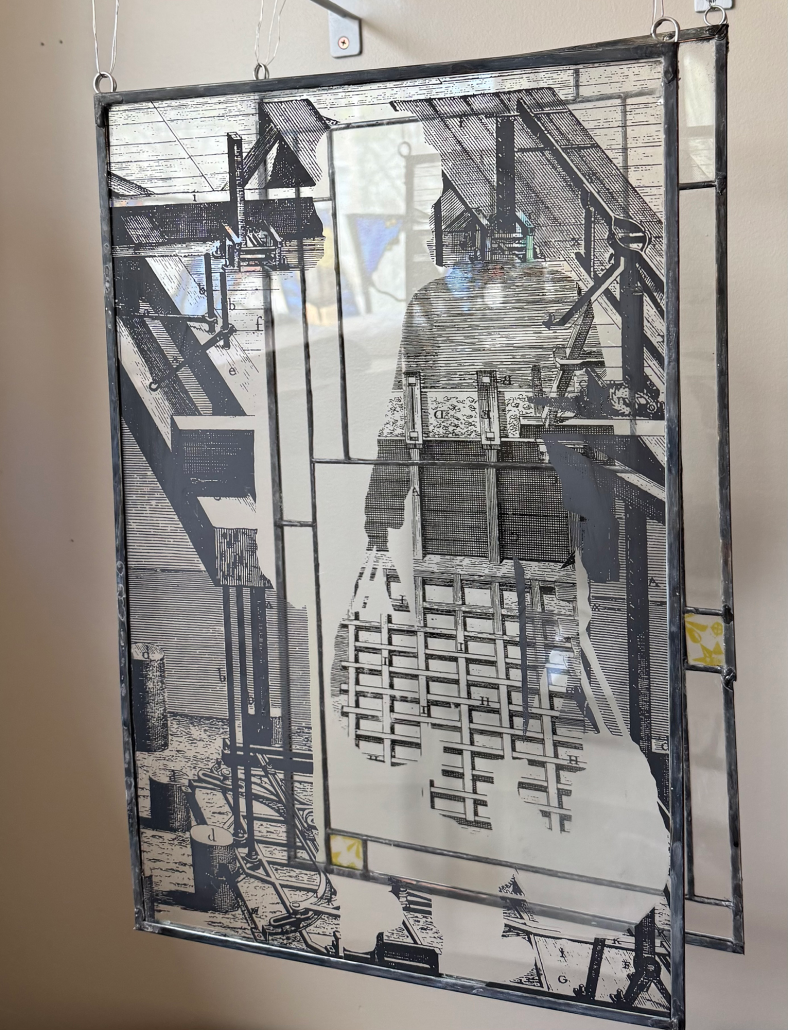
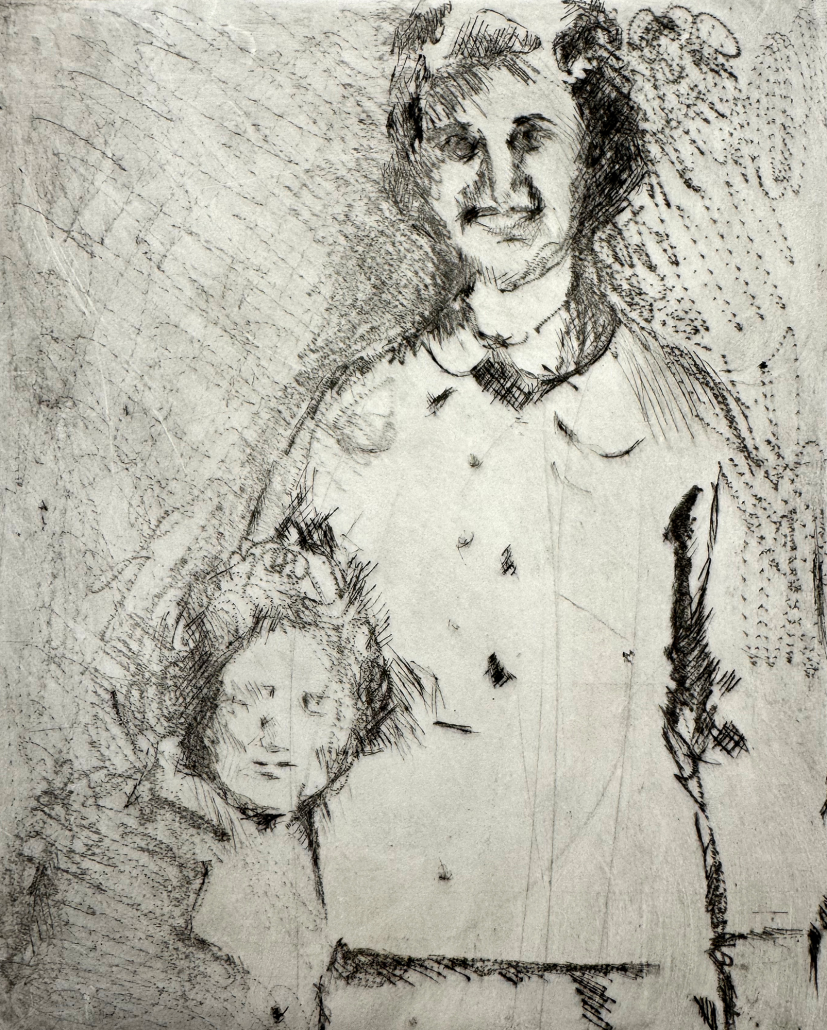
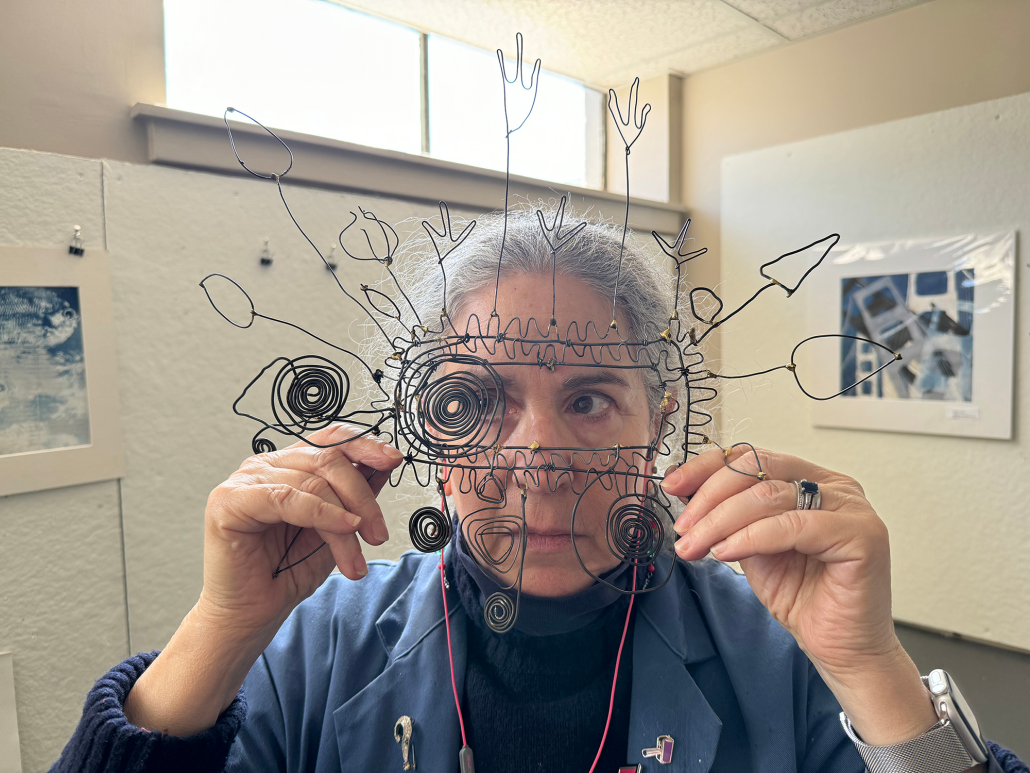
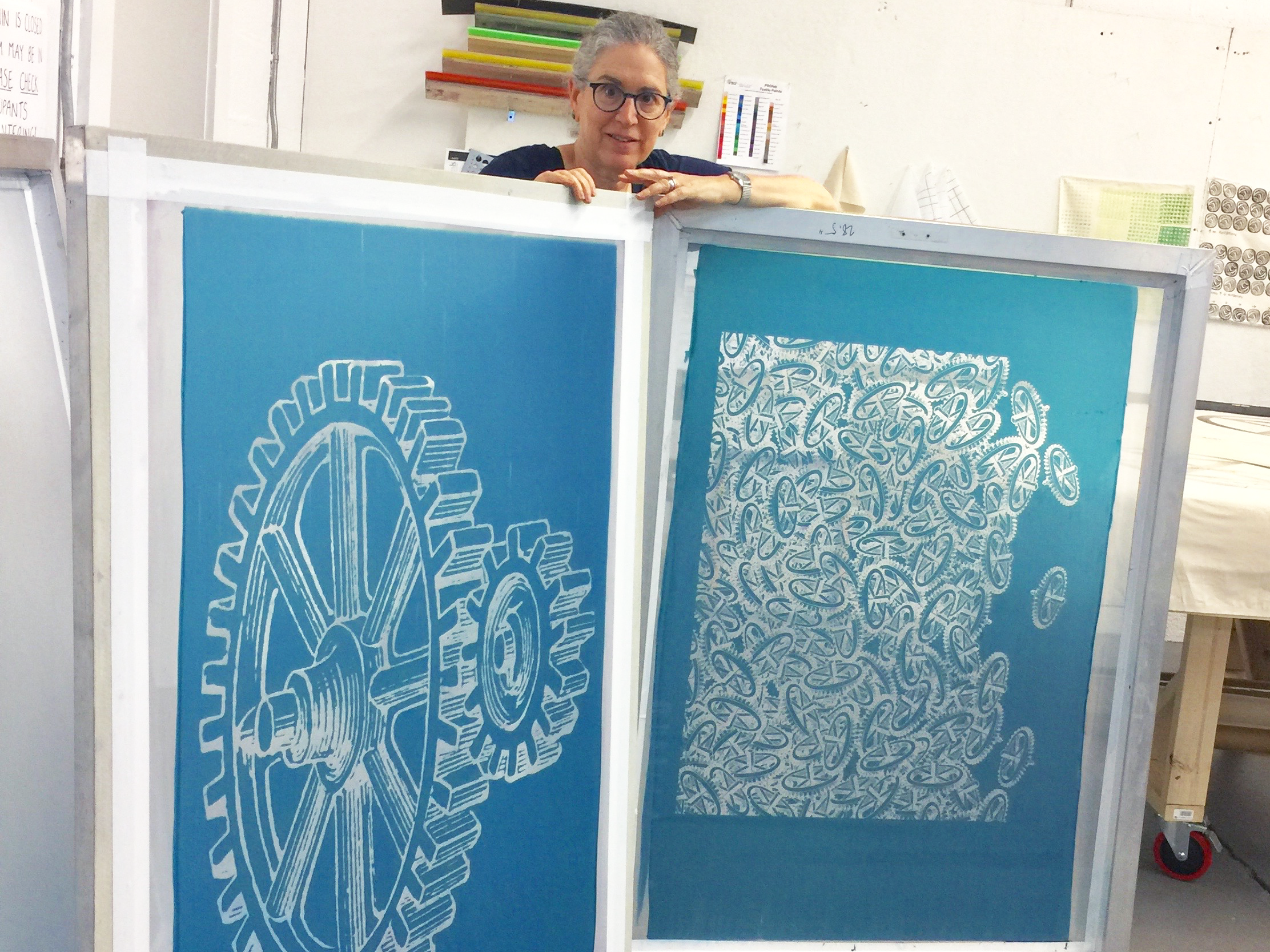
Liz Shepherd received her MFA from the School of the Museum of Fine Arts, Boston in 2006. Even though she has never identified as a printmaker Liz invested a great deal of time in learning about it, especially multi plate photo etching using copper plates. Combining sculpture and printmaking has been an on-going interest. She has silkscreen printed handmade paper to make papier mâché installations, silkscreened on wood to create life sized, wall mounted “furniture”, printed on cardboard and fabric to make ceiling hung ladders. She is currently silkscreening glass for kiln firing to make stained glass installations.
Sara: Where were you born and raised?
Liz: I grew up in Manhattan
Sara: What did you do before you went to grad school?
Liz: I was painting in my home studio and raising children.
Sara: Have you always lived in the Northeast/Boston area or have you lived elsewhere in the U.S. or other countries?
Liz: My husband and I moved to Boston from NYC in 1981; we have lived here so long that it is hard to imagine living anywhere else. I have lived overseas periodically. Travel has influenced my work since I was a young teen.
Sara: Your work often uses symbolic objects as metaphors for personal things you are dealing with that resonate on a universal level. How would you describe your practice to someone encountering it for the first time?
Liz: I would say that since becoming familiar with signs and symbols in Early Christian Art, working in that way has always been a useful language. It is more interesting to me than literal representation.
Sara: How do you land on the objects you end up using as subject matter? It is a matter of considering options and discarding nearly all of them. It is both a cerebral and intuitive process. What questions are currently driving your work?
Liz: I am trying to discover what I can do with printing on glass. It is a compelling technical challenge. At the same time, I am revisiting the imagery about immigration that I started after I traveled to Berlin in 2009. It is a subject that I find complex and deeply troubling. What are you paying attention to right now that you weren’t five years ago? My interest in 3D work is stronger than ever. I haven’t lost interest in printmaking but I need to bring it off the wall.
Sara: What feels at stake in your work today?
Liz: I can’t help worrying that working in stained glass is too “crafty” but I am trying to ignore that demon voice and keep working on what is compelling.
Sara: What are you working toward next?
Liz: It’s going to take a great deal of time to explore working on/with glass. I am finding my way through traditional forms and imagery to expressing my own voice. I am very interested in learning technical proficiency so that I can choose the degree of “finish” that I want. This pushes back against traditional stained glass. That can be seen as lacking the beauty of the expected form.
Sara: How does your work running Shepherd & Maudsleigh Studio inform your own studio practice?
Liz: The diversity (printmaking, alternative photography, papermaking, textiles, book arts) of what is going on around me encourages and rewards risk-taking.
Sara: This exhibition emerges from nearly two decades of sustained conversation and critique with the same group of artists. What does a long-term artistic relationship make possible that a short-term collaboration cannot?
Liz: It is similar to any long term relationship with a partner. There is trust and memory that is the product of time. That can’t be overstated.
Sara: The title of our show Here, Still suggests both presence and persistence. What does it mean, for you, to remain, with a place, a question, or a group of collaborators?
Liz: It is a choice that we make every month to put aside the time and remain committed to bearing witness, honesty and care. Like any relationship it takes work.
Sara: In your own practice, how has time, especially the extended time of experience, functioned as a material?
Liz: My own life experience is a part of what I am bringing to bear but what I read and witness of history is just as important.
Sara: How has sustained dialogue with other artists shaped the way you see your own work?
Liz: My colleagues bring up challenging viewpoints that are sometimes difficult but all the more so useful.
Sara: What does a productive critique look like to you now, and has that changed over time?
Liz: Productive critique is tough without injury. It encourages growth without shutting down the artist. I think it has to come from caring and respect or it can be damaging. It asks questions that promotes growth rather than passing judgement.
Sara: Has this continuity influenced your risk-taking or experimentation?
Liz: Absolutely.
Sara: Are there moments from the group, conversations, critiques, or even disagreements that have stayed with you or shifted your thinking in a lasting way?
Liz: Yes, that is why it is useful. I think we have all moved beyond looking for kudos and are hoping for disagreement, otherwise it isn’t useful.
Sara: What role does listening play in your practice, both in the studio and in the critique space?
Liz: There is a time for listening and this is mostly outside the studio. It is important to leave other voices at the door having digested critique as much as possible.
Sara: Has being part of this group changed how you approach looking at other artists’ work?
Liz: Yes, it requires stepping out of yourself and being patient.
Sara: Looking back, what has been most meaningful to you about our time together as a critique group?
Liz: There is meaning in all of it.
Sara: What do you think makes a creative community endure?
Liz: The community will endure as long as it is nourishing. That is a funny word to use but it represents how it feels to be supported. I don’t really see an end to that.