François-Xavier De Costerd
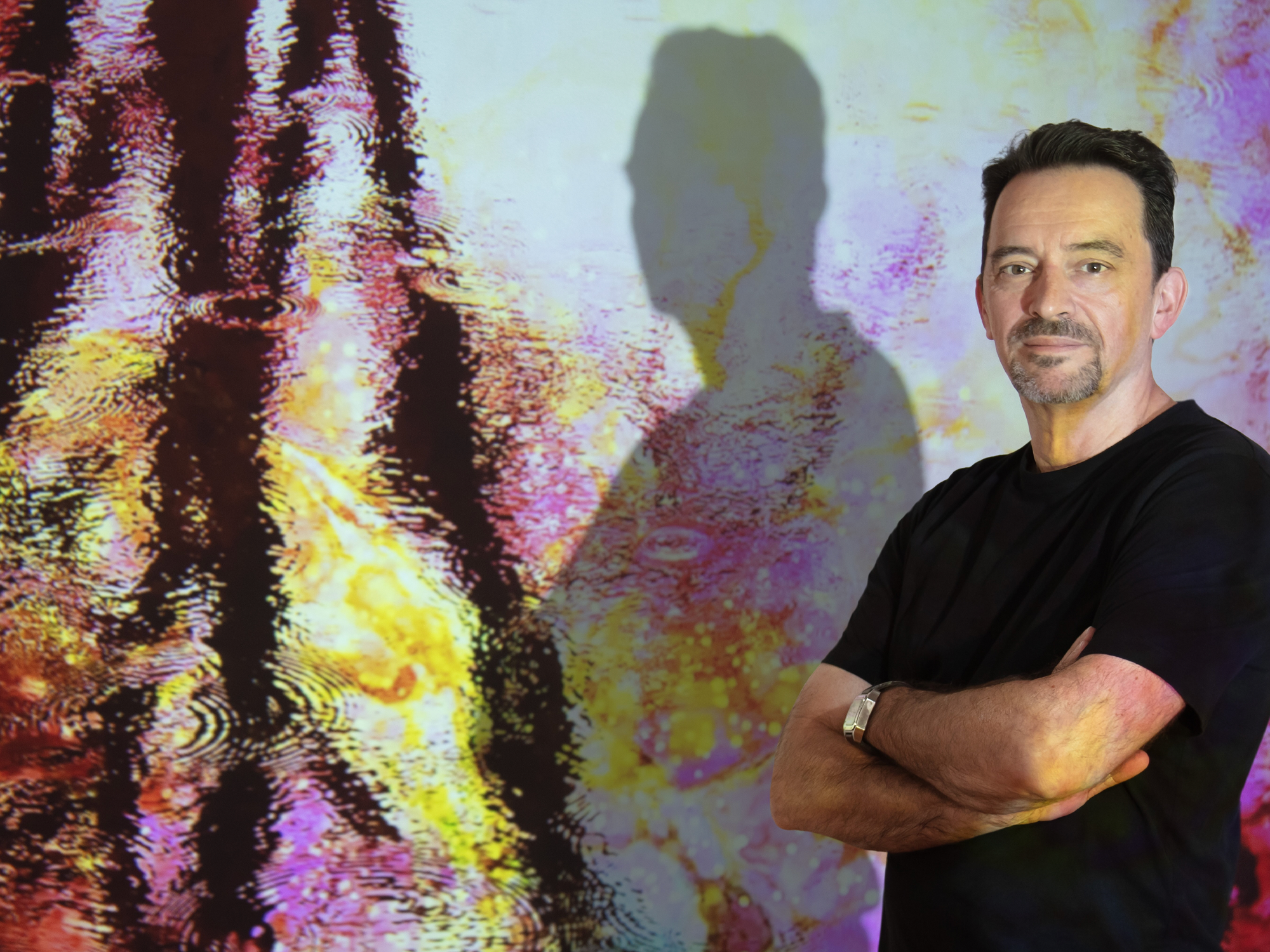
Interview of François-Xavier De Costerd by Leah Gauthier
François Explores how capitalism and biopolitical systems shape the relationship between humans, their environment, and toxic landscapes through video, digital collage, and immersive installation.
Leah: I know that you were born and raised in Lyon, France. When did you come to live in the U.S., and why?
François: I was born in Lyon, but raised in a small village right outside of the city. So I am not a city kid. I first came to the US in 1988 for a summer and then I came here as a student in the fall of 1989 to do one year as a senior in a Boston university.
Leah: How old were you?
François: I was 19 years old and I couldn’t even get a drink legally.
Leah: What was your childhood like? As a young kid growing up in this village, the immediate and extended family was always really close so I was always at my grandmother‘s or when I was really young at my great grandmother‘s as my mother was a single mom working full-time I was a single child, but I was raised with a bunch of cousins who were always around. We liked to go play in the woods unsupervised, play soccer in the yard, and watch American TV series like the Wild Wild West or the $6 million man. We were always riding our bikes and that turned into a passion for me when I became a teenager.
Leah: What are a few of the most profound cultural differences that you’ve experienced between these two places?
François: I feel like money in this country is much more of an obsession, how it defines who you are as a person, and that obviously is a direct consequence of your profession, your career.
Even though I was very young when I first came here, when I started to get out in social situations with a bunch of strangers, I could tell that it was very important to present yourself as a professional. Somebody who has a career or a job. And that comes very quickly in introductions with strangers. I don’t think this is how people introduce themselves in France, especially to strangers. What they do is for them to know and maybe for you to find out one day. The veneer of a job or career doesn’t really define who you are as a person in France as much as it does here. It’s considered a bit rude and gauche to announce what you do and imply how much you make. When I go out for a ride with a bunch of guys who are my age or a little bit older, you can really tell who has money and who really doesn’t, not necessarily by their bicycle, but by what they talk about.
Leah: Have you always lived in the Boston area or have you lived elsewhere in the U.S. or other countries?
François: Yes I came here to study and I sort of stayed even though I had to go back to France for the military service in the 90s which was still compulsory then. Boston was always European-feeling and somewhat familiar in how you could walk everywhere if you wanted. I loved it.
Leah: How do these experiences of living between cultures influence your work or the way you work?
François: I think I was too young when I left to really have had a work culture experience while in France. I think I only had one real job in France one summer. And I got this job because my English was pretty good and I had to deal with customers in different countries. It is true that France values time off and quality of life a lot more than American culture does. Time off does not make any money. Therefore, it isn’t important or even relevant to having a good life here. But I believe that is changing. There is definitely a point where Americans are getting fed up with empty promises of the dream, getting rewarded for your hard work. I think that the lower the income the higher that feeling of getting fed up is true. As far as I am concerned, my work ethic is very focused and I don’t think much about time off, vacations or big long weekends as a typical Frenchman would.
François: As far as studio work is concerned it comes in waves with extended periods of thinking in the background, getting a bit nervous about not being productive. And finally, getting pushed over the edge into the work at a frenetic pace, which is either dictated by a deadline or a sudden urge to produce everything I’ve been thinking about for the past few weeks or whatever time I’ve been away from the work. I was alone after Christmas for a couple of weeks and it was like a mini residency where I was just doing art from morning until bedtime. I barely saw anyone besides folks at the grocery store and that felt great.
Leah: Your work often exists at the intersection of art, popular culture and the environment, sometimes in collaboration with other artists. How would you describe your practice to someone encountering it for the first time?
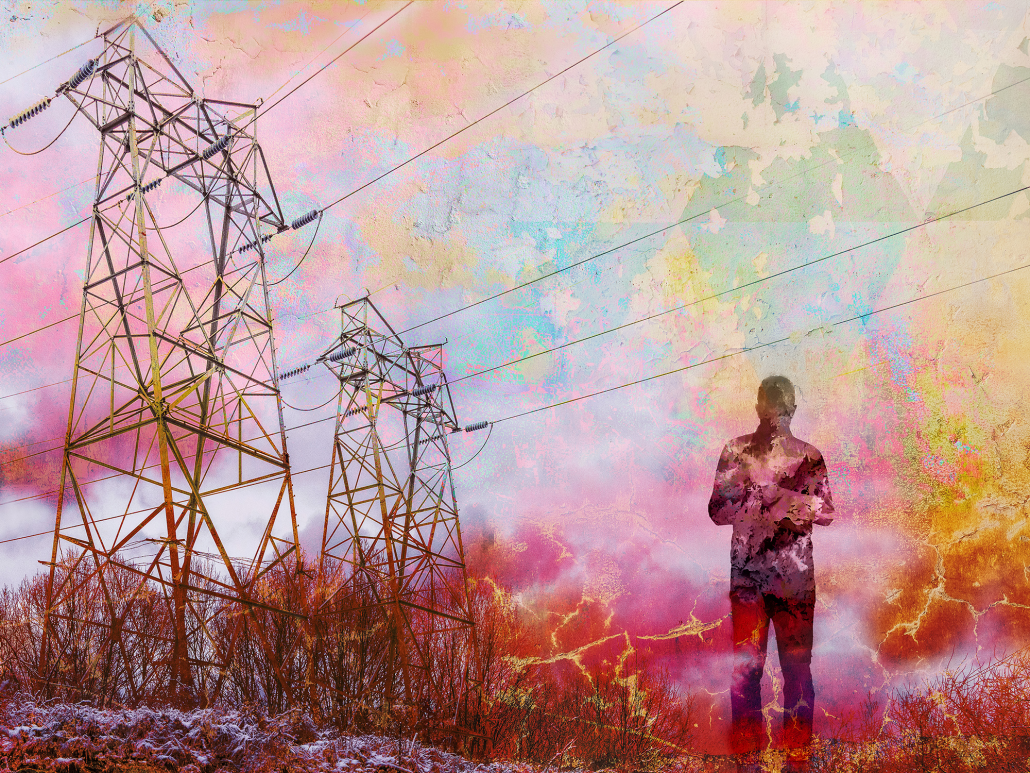
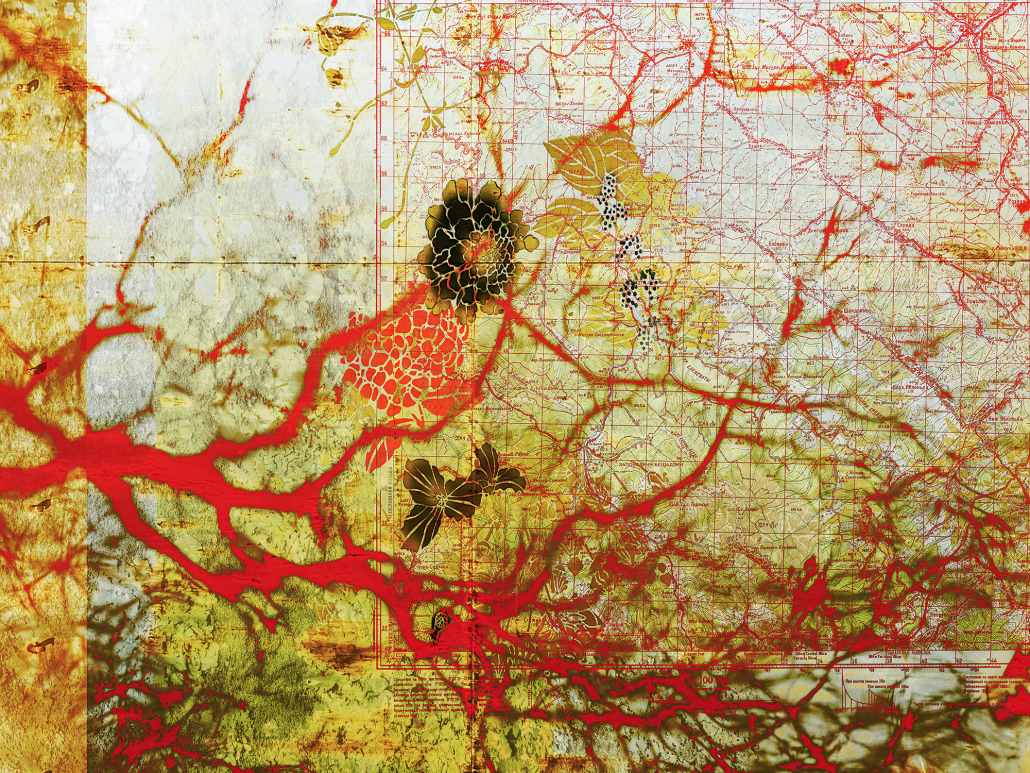
François: The official summary version is that I Investigate the quiet violence of state power and biopolitical systems through video art, digital collage, and immersive installation. My practice reframes capitalist excesses and “forever chemicals” as both material residue and political symbol, exposing the invisible contamination of our bodies and the natural environment.
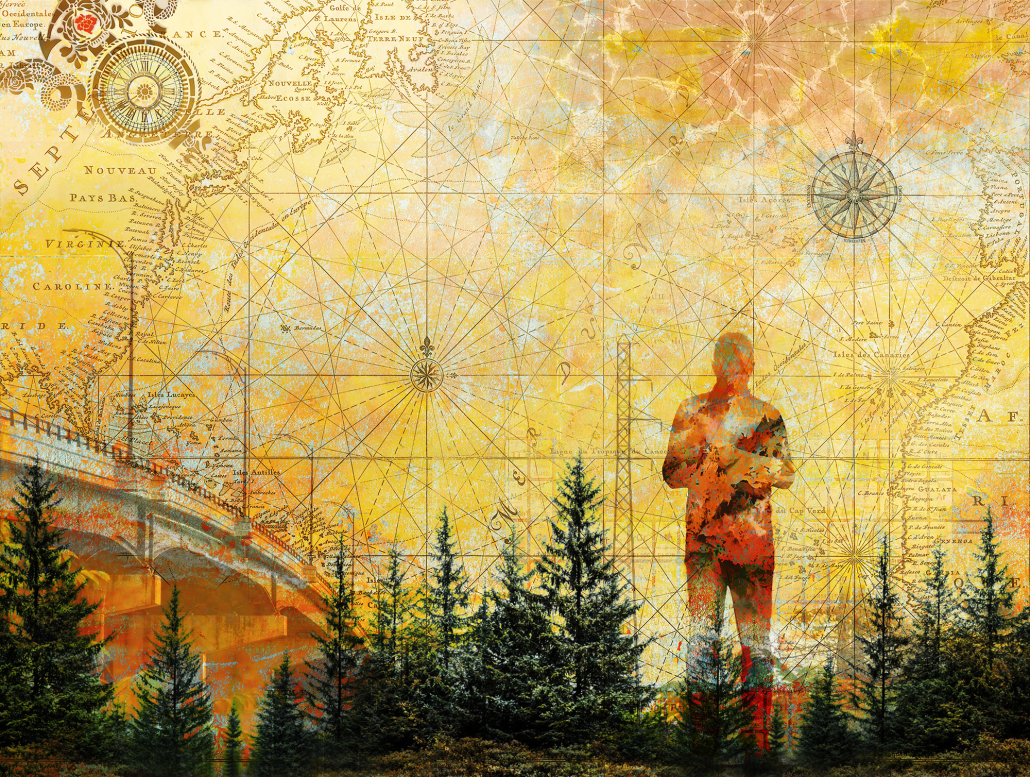
What would a contaminated aesthetic look like? Like the accumulated layers of the things that impact us in our environment every day, the landscapes and the figures represent this constant bombardment of pollution, misinformation, lies, hopes, and fears that make up our daily lives and sum up the human condition in the 21st-century.
I love the moving image so I’m a voracious viewer of film and TV which is always a source of inspiration and temperature gauging of the culture and moment. I enjoy reading as well but in a more deliberate way with very select books on art or the environment. In the things I watch there is often a moment or a bit of dialogue that strikes a chord in me and will trigger the connection with something I’ve been thinking about. This is usually an association that allows me to create a metaphor for whatever it is that I’m considering. Appropriating a bit of a lecture by Alan Watts or something from Carl Sagan or Noam Chomsky, that kind of dovetails with the imagery and sensibility that I’m putting together, allows me to elevate my edit in a more profound way than if I was to voice it myself probably.
Leah: What questions or urgencies are currently driving your work?
François: I would say that I am still really interested in the questions surrounding capitalist excesses, how it impacts our environment and ourselves. So framing these concerns either around contamination or the mediated, political state power, and bio political systems, while being a witness, and you know, a kind of sentinel poet resistant.
There’s so much going on right now that is wrong with our democracy and our political system that it’s difficult to really crystallize what you want to say in a single work.
Leah: Many of your projects involve systems, biological, technological, or environmental. What does your process actually look like day-to-day in the studio and or out in the field?
François: Out in the field, I am usually out with my tripod and camera to capture landscapes where there are signs of neglect of decay or some kind of natural permanence that can’t be stamped out by the human will. So I tried to frame things in compositions that will contrast the natural in the built environments to really echo all of this progress promises against the destruction and capitalist overtaking of the natural.
Leah: Are there moments in your process where control gives way to collaboration, with nature, machines, or unpredictability?
François: Yes, definitely. I feel like with the layering process of the tools that I use there is a constant Polaroid reveal moment, and I get to choose which way this layer will appear over that one for instance. I enjoy that process very much because it’s a contemplative exchange with the tool and it allows a very personal judgment in taste that will make my decision go one way or another. I do think that there can be somewhat of a subvertive seduction at times. With certain tools it’s possible to be attracted to one thing or another simply because of the way it looks and lose sight of the fact that picturing and representing one thing in one way versus another says something totally different.
François: The new generative Ai onslaught is especially fraught with personal, artistic, and ethical issues. It makes me wonder how long I’ll be making video art if anyone can just do it by typing a simple prompt.
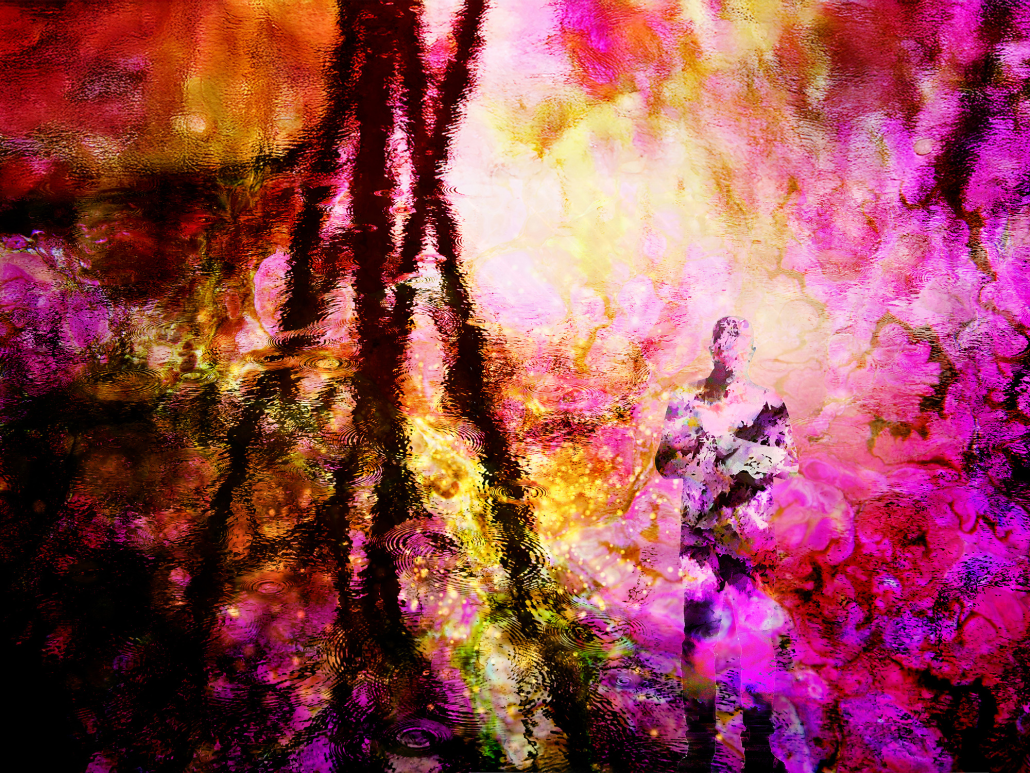
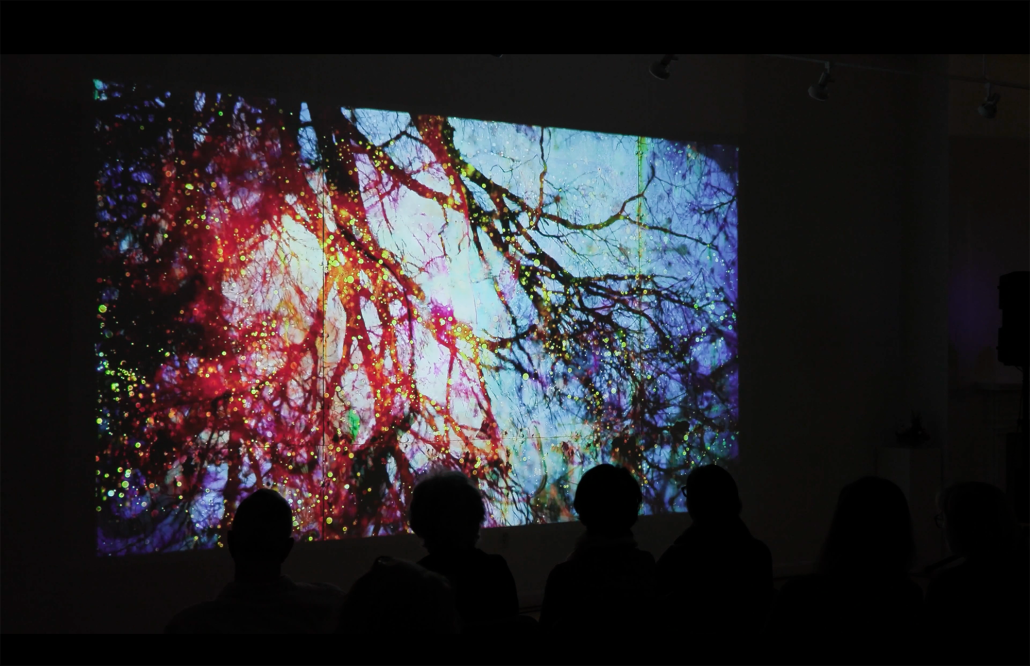
The extent of my collaboration with nature probably deals mostly with light conditions or maybe ocean or weather conditions. I’m especially attracted to how nature and the woods around cities and towns tend to look at the end of winter before spring. I’ve never quite understood this attraction but I think it has to do with the fact that when it looks all gnarly and dark, it’s still alive, like surviving what our civilization is putting it through. So it’s sort of a very somber aesthetic, but it does please me in that it is resilient. And as naked as it is without any leaves or even buds, it often shows all the detritus of our over consumption scattered about on the ground, like evidence of our negligence.
Leah: Do you see your work as a form of witnessing, intervention, or something else entirely?
François: I think it is more a form of witnessing than an intervention but also think it’s crucial for me to connect with the audience in a personal way. I like to give them something they can recognize and identify with. It’s especially rewarding when someone will come to me and say how the work connects with their lives or with a memory that they have. I had this older man come to my artist talk for Forever With You, and, as a long time resident, he is intimately familiar with the land that I depict. Having grown up here, he knows how much it has changed and how it’s been devastated by development and pollution. He was saying how, when he was a kid, he could go fish in the Salem river for a special kind of fish that has now completely disappeared.
Leah: There’s often a strong sensory component, sound, light, atmosphere. What role does the body play in how you think about viewers encountering your work?
François: The sensory component you refer to, I would define as a feeling where you let go and get immersed by the experience of watching the work. Besides multi-channel installations, I have not had the opportunity to create installations where the viewer could actually move around in a space to really encounter the work and experience something totally different from just sitting there from the typical static spectator point of view. I think it would be particularly awesome to install Forever With You in a place with different viewing sections you’d have to walk through.
Leah: How do you design for experiences that are felt as much as they are understood?
François: I think you’re especially right in saying that these are to be felt as much as understood because it is not like reading a book or listening to a lecture or going to watch a film with a bunch of explosions and laughs. That part of mystery in the work that is unexplained should connect to your own mysteries, secrets, and experience. That way, the work becomes yours, and you are free to bring to it whatever makes sense to you to really live it in that moment. The challenge these days is that our attention span has been completely shot by the various apps that we constantly get pulled to. So how do you construct an experience that can be as immersive and attention grabbing as possible to get you fully engaged in the experience today? The short answer is that a 10 minute video today feels like a full feature film.
Leah: Your work often operates across time and ecological cycles. How do you make those temporalities legible or tangible?
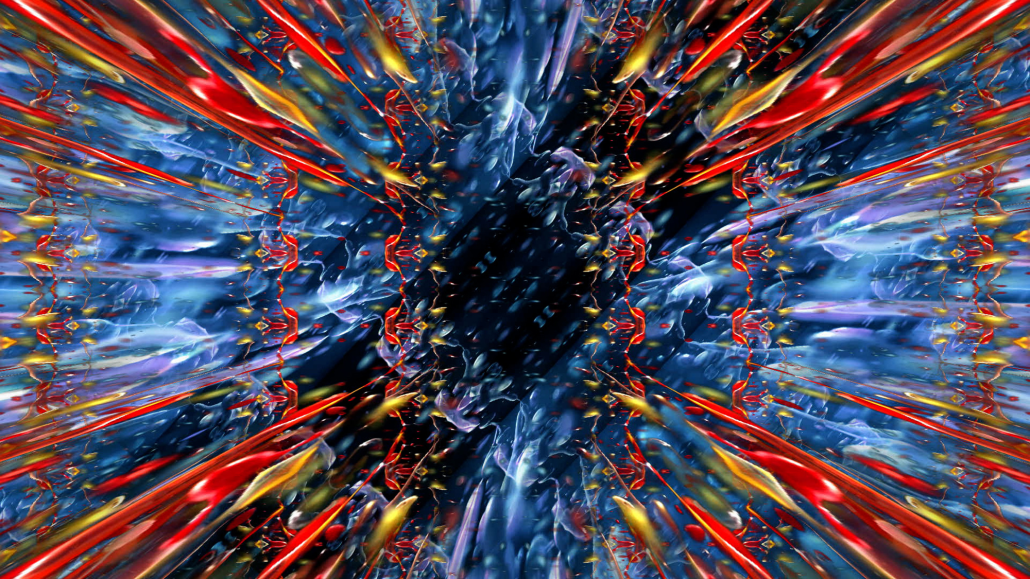
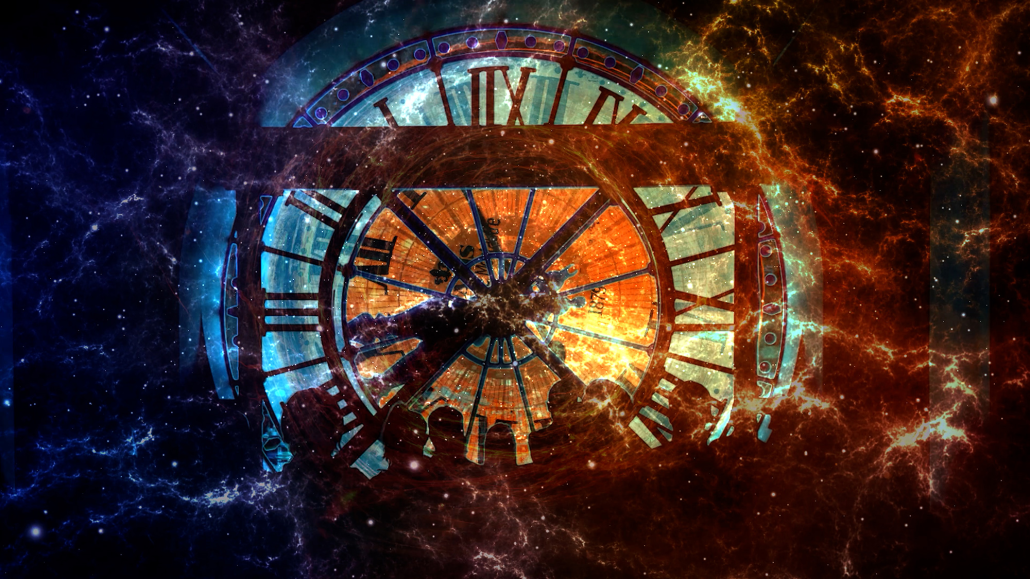
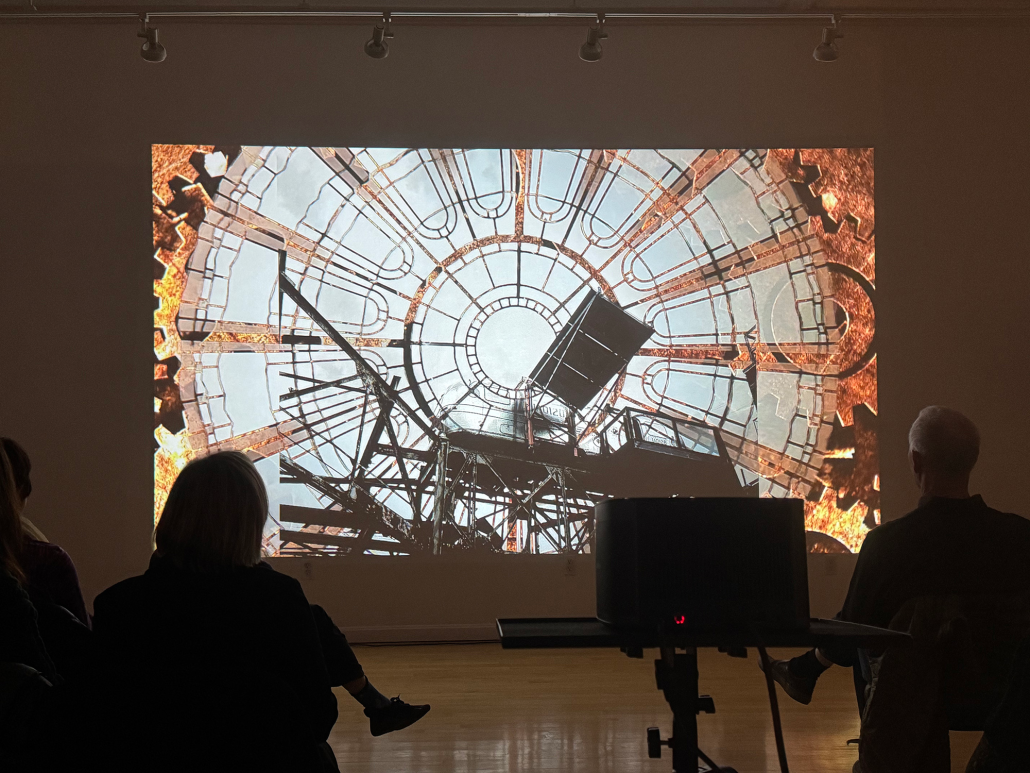
François: If you’re referring to Oceans of time, the premise of that work was to show that humans have been around for a very short time since the beginning of our universe, but that their impact is completely disproportionate. As Carl Sagan explains, the cosmic calendar makes this realization very tangible.
Leah: Has your relationship to the natural world changed through your work?
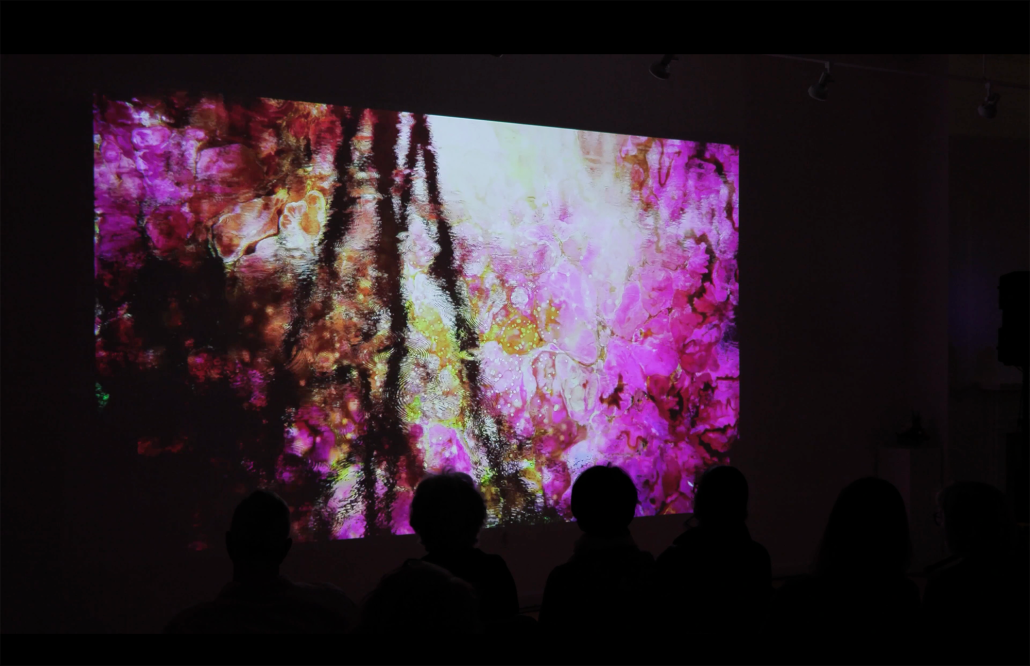
François: I don’t really think so. Most of my work starts with a landscape and reading its subtext. When I got my new camera in the winter of 2022 I went to take photographs at Winter Island and I kept returning to the same spot where the textures and colors in the rocks became absolutely fascinating to me. I started capturing images of the tidal pools and water reflections, colors and more textures. Then I guess this close observation of nature led me to looking at more water reflections like the ones that appear in Forever with You.
Leah: What are you paying attention to right now that you weren’t five years ago?
François: Probably my health and what I put into my body. But also signs of decay and abandonment in the landscape around me. Places that get worn out from too much use like traffic for instance will probably get repaired and mended. But private places that aren’t turning a profit or have become too expensive to upkeep, there’s a good chance they’ll disappear, just like that fish.
Leah: What feels at stake in your work today?
François: There is so much noise and irrelevant fluff content flying around in our immediate periphery that to carve out a little bit of people’s attention is especially challenging. That’s the first thing. Secondly, trying to present serious subject matter without being preachy, or dull is also a concern. I still want to keep beauty as a way into a world that poses serious questions but it’s hard. You are very aware of the constant leaps of generative artificial content. That is scary.
The level of overall stress in American culture is so high that presenting work that either soothes that or revs it up isn’t, in my opinion, where it’s at. All the click baiting with alarmist imagery or escapist symbols, usually scantily clad female bodies, only serves to dull the mind. I feel like trying to stay sharp with a sound intellect has become one of the biggest challenges of this moment.
Leah: What are you working toward next?
François: I am working on a collective portrait made of fragments of personal imagery from this group. This is a new challenge for me, but in many ways, it is familiar to be working with appropriated material.
But this project still relates to how the contemporary self cannot be understood as a coherent, bounded entity, but as a site of accumulation, where exposure, mediation, and material illusion converge. It will be interesting to see the inter connections and associations that emerge from this content, as well creating metaphors for a larger sense of what it means to be together as artists yet apart physically.
Leah: The title Here, Still suggests both presence and persistence. What does it mean, for you, to remain, with a place, a question, or a group of collaborators?
François: We had a lot of deliberations about this title. Ultimately, I think it represents the ethos of the group who has committed to meeting regularly over these past two decades. A few people came and went. There was a lull at some point, but those who persisted are still here. This accumulated amount of critique and discussion time is significant for us as artists.
Leah: In your own practice, how has time, especially extended time, functioned as a material?
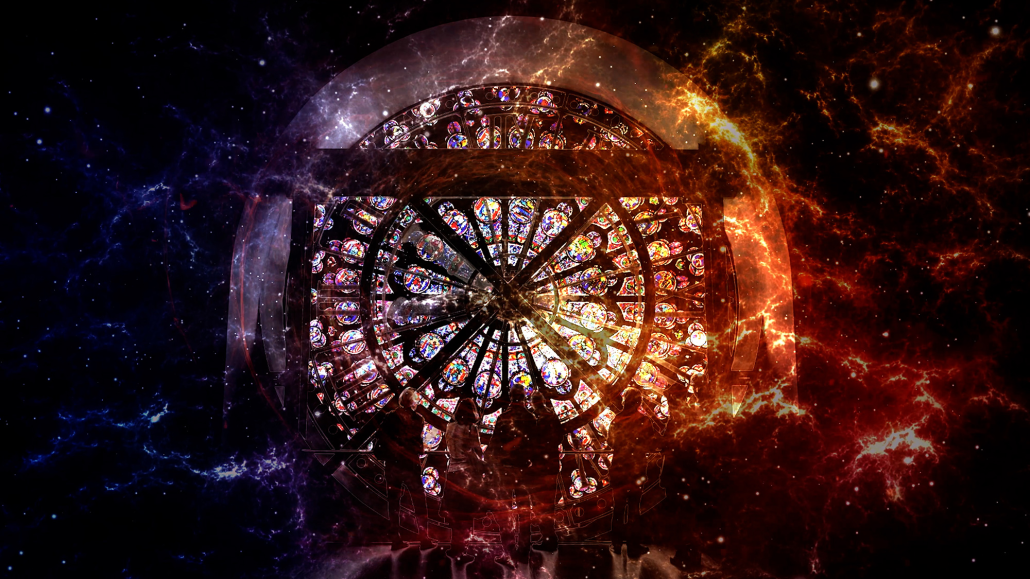
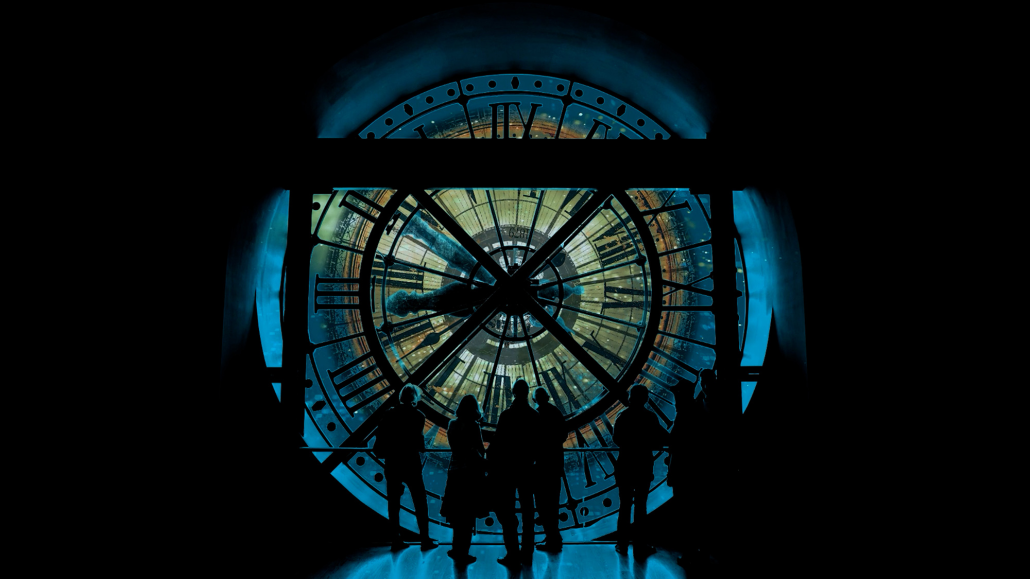
François: This latest work, Forever with You, was refined over months which is somewhat unusual for me. A video will take a few months but this was deliberately slow in its birth. I think that it started in the Fall of 2024 and early 2025 as I was trying to find a way to animate some key frames in L’Etat Du Ciel – Ocean of Time. It was first presented as a very early (third version) sketch in May. After a round of critique in this group, it was reworked and edited to be presented as an installation in August 2025. The final version (version 15) was presented in January 2026. Over that period of time all kinds of changes appeared that transformed the edit. This gave the work an opportunity to mature.
Time is important with this kind of work. With Forever With You, there are things I know I was trying to do. And yet, there’s so much I’m going to discover in the months and years ahead. Because you learn so much about a video work from both the people who see it and from time passing. After the distance grows since its inception, you can take a look back at it and discover more things that you didn’t realize were there.
Due to its nature, video art is never completely 100% finished. It can be exhausting but it can also be this very flexible medium that can adapt to a lot of situations and presentation needs.
Leah: How has sustained dialogue with other artists shaped the way you see your own work?
François: Your turn to present work in this group comes around every few months, which is enough time to think about what you’re going to do or show and share with the group. It’s always interesting to see what the others have done in their practice. You can see where there are some connections or even some true intersections. That’s even interesting to think about what the material processes that other artists are using that could help your own.
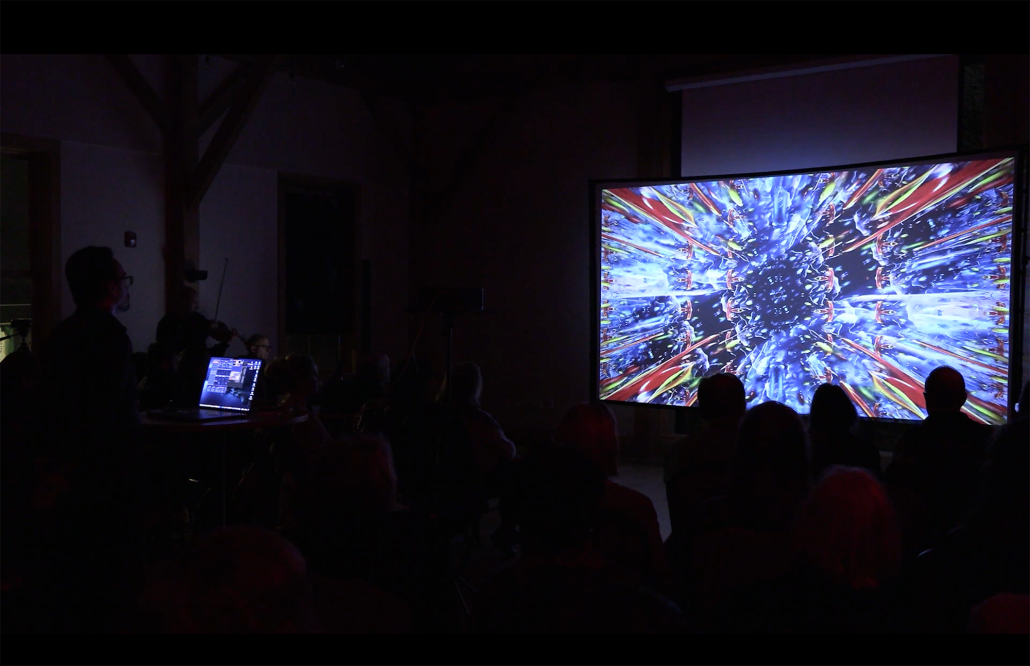
But this is also useful when I am working with artists outside the group. Right now, I am working with musicians to use Forever With You in a live performance setting. Some intense discussions were required for me to retain all the voices in the piece. For them, anything that interferes with the music should be taken out. For me, removing all these voices would strip the core of the work from its human heart. Small changes are necessary but some aspects in your work become your hill that you need to defend.
Leah: What does a productive critique look like to you now, and has that changed over time?
François: It’s hard to say if it has changed over time, but I guess what’s expected in a critique for someone who isn’t really used to the process is to get some advice and some artist names to get inspiration from. But I guess for me the conversation around what the work creates in others and getting an honest reaction that is less academic and more personal is important to me. And that sort of honesty and personal sharing cannot really happen with people you don’t know well. So this group has a certain amount of shared experience and familiarity which allows this more personal sharing to occur.
Leah: Has this continuity influenced your risk-taking or experimentation?
François: Over time this familiarity and shared experience can create the necessary trust to share work that is new and untested. This might be work that you are very unsure about. This might be just the idea of a new vein of work. Obviously, you could ask this from a curator or a stranger, but you might not trust their answer as well as you with somebody you know better. Also the accumulated common knowledge amongst the group allows people to have a deeper understanding of where things might be coming from or going towards, and this would also be a benefit. A danger would obviously be what familiarity can sometimes create, which is a softer gentle approach ripe for too much forgiveness and not enough impartial clarity.
Leah: Are there moments from the group, conversations, critiques, or even disagreements that have stayed with you or shifted your thinking in a lasting way?
François: Usually, what remains are the moments of encouragement, the support given to one another. Sometimes only a single word or idea might help you push through difficult points in your process or might help you realize that what you’ve been doing wasn’t entirely about what you thought it was. A few positive words last longer in my mind. I usually don’t dwell on the negative stuff. Except maybe for that one…
I remember working with Todd, who has since left the group, for that summer show at the Boston Sculptors Gallery. We shared a studio space in East Boston and we were art buddies. When he announced that he was quitting, I was kinda devastated. Not just for him but as in any departure, selfishly for me. I think that it was at Kerry’s house and when I suggested that being an artist wasn’t something you just quit because it was a calling or something, this woman put me coldly in my place saying that “people quit art all the time.” And that, basically, who was I to question Todd’s decision.
That (half) truth made me realize that indeed, making art and being an artist may be two different things. It also put this fear in me that one day this artist thing would be over. Not because I’d be gone but because I’d lost the drive, the time, or the means to make art in the studio. As a result of this, I often wonder if this present moment is the best this is ever going to be for my art practice. Maybe this is due to having finally come to art later in life, but I sometimes feel like I am running out of time.
Leah: What role does listening play in your practice, both in the studio and in the critique space?
François: Going back to the musicians’ (Soundscape Visions) example, listening to their concerns and understanding their point of view can be difficult but it is a necessary step in collaborations. If we were to create a piece as a collaboration from the ground up, I think that it would be a painful endeavor. Being able to create a video by myself where they can compose whatever music they want is best. They ask for descriptions and adjectives to detail how certain sections should work emotionally. It’s a weird exercise to write about your experimental video in terms of emotional adjectives. But I guess it helps you understand what some sequences actually express and what tone you use.
When we do this in reverse and I am asked to make visual content for a piece of music, it feels like being blind in front of a cliff. You can hear the song but it’s extremely difficult to take the first step. As a visual artist it isn’t easy to get into that mode of artistic creation. When I ask for descriptions of certain movements in Bach’s prelude and they say “Well it’s the same as before but a little darker…” you have to rely on your instincts which deal with composition, color, texture and rhythm.
Leah: Looking back, what has been most meaningful to you about our time together as a critique group?
François: Being exposed to a really wide ranging amount of work in this group has been extremely valuable and rewarding. The level of accomplishment and dedication of all the artists is inspiring and has helped me get motivation at times when it was hard to find.
Overall, it’s the trust and the community that defines the group. It feels like we understand each other‘s practice better and are able to encourage each other to become better artists.
Leah: What do you think makes a creative community endure?
François: We have seen a few people leave the group for various reasons. I think that showing up is the most important aspect of a community. Being generous with your time and attention is crucial but also being able to speak your mind freely without fear of being judged is essential.
When they make the book and documentary about this group, what will they say? I don’t think it will necessarily be about specific art works for each one of us but rather about a shared cultural output and this show would be a good place to start.