Karen Rosenkrantz
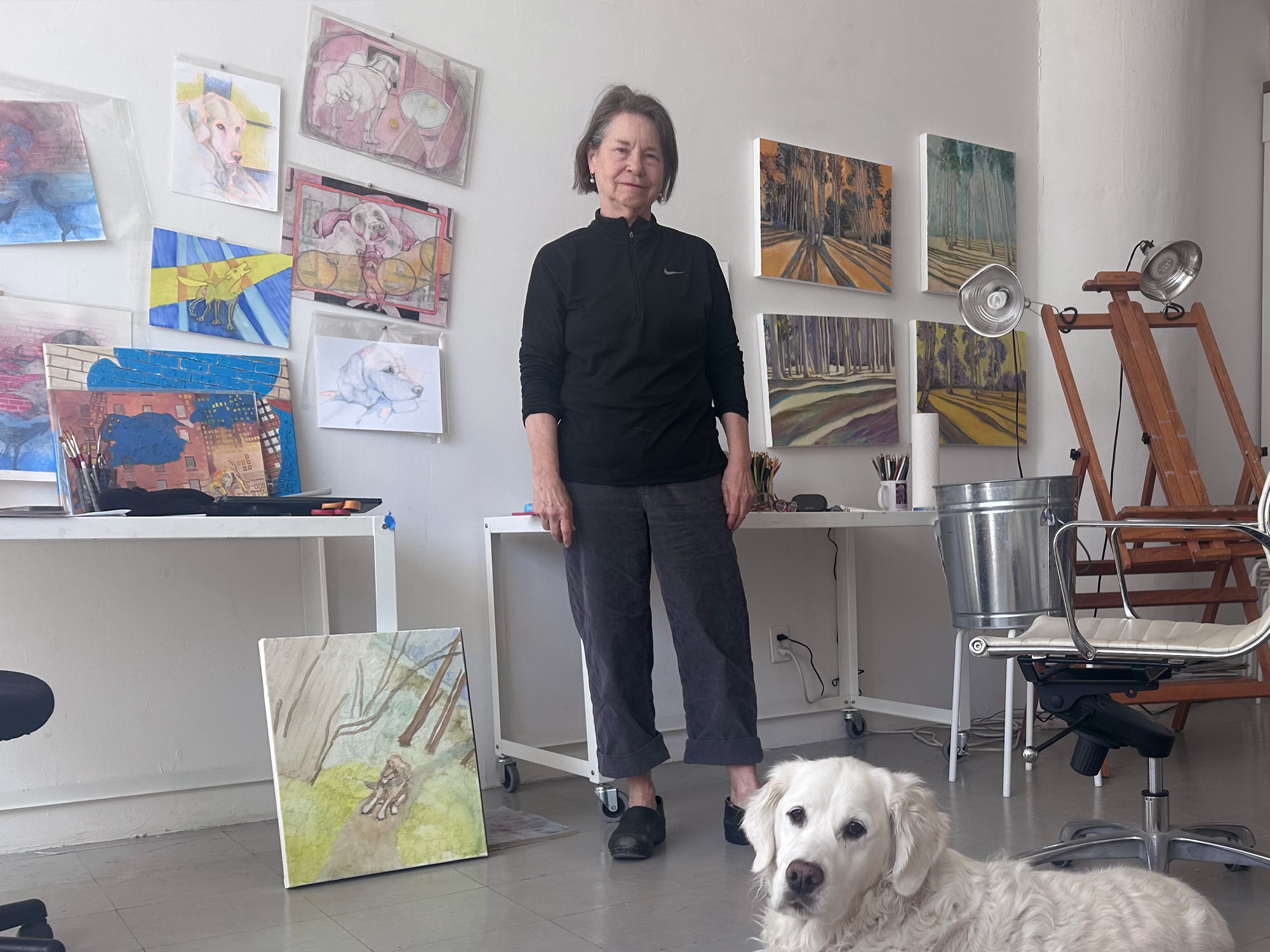
Interview of Karen Rosenkrantz by Liz Shepherd
smoke
I am old—
or maybe just newly aware
of time as it settles into the body.
I can feel the shift.
Pick an image, an idea –
frosted testament to passing days.
Dissect
reassemble
again and again.
As if somewhere in the layers
I might find an answer—
a way to understand
what was happening to me. Not repetition,
but a question that wouldn’t hold still.
Endless images evolving,
adjusting, rearranging –
forms loosening into other forms
until new shapes appear.
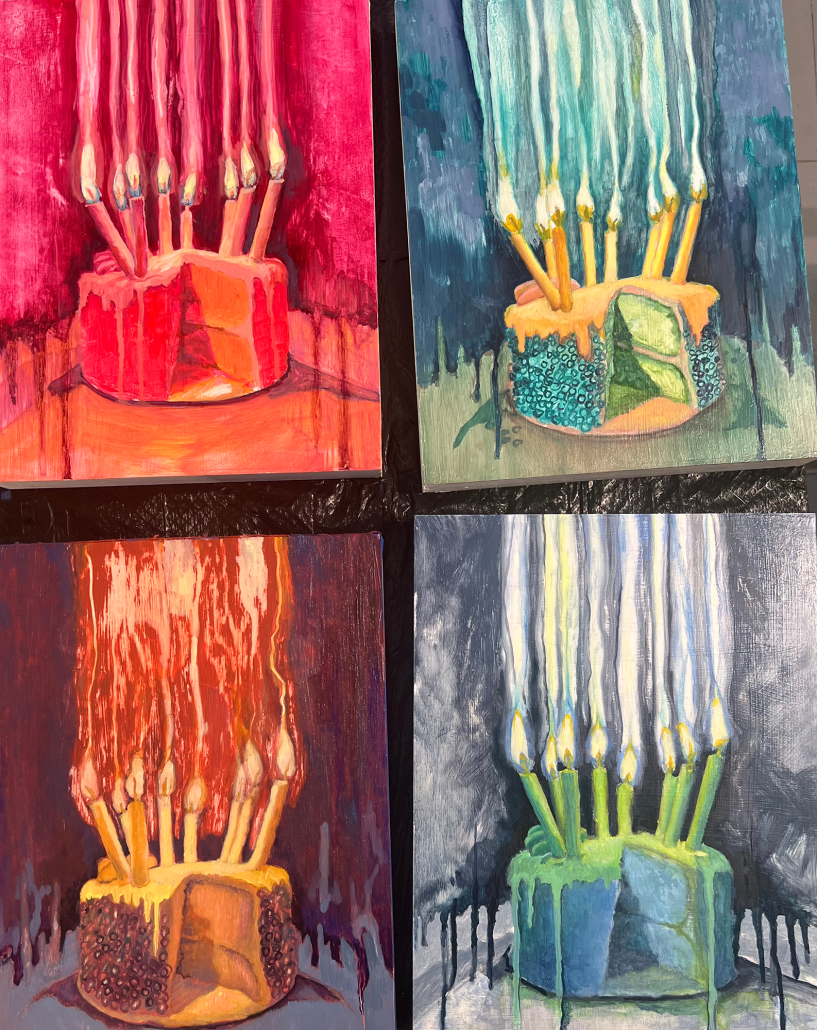
Liz: Your birthday cakes are so lovely to look at. I am interpreting that delicate touch as a way of seeing the wisdom and “ the accumulation of experience and memories” (as you put it) that comes with aging. Would I be correct in interpreting this gentle beauty, kindness, really, as a way to combat contemporary cultural messages?
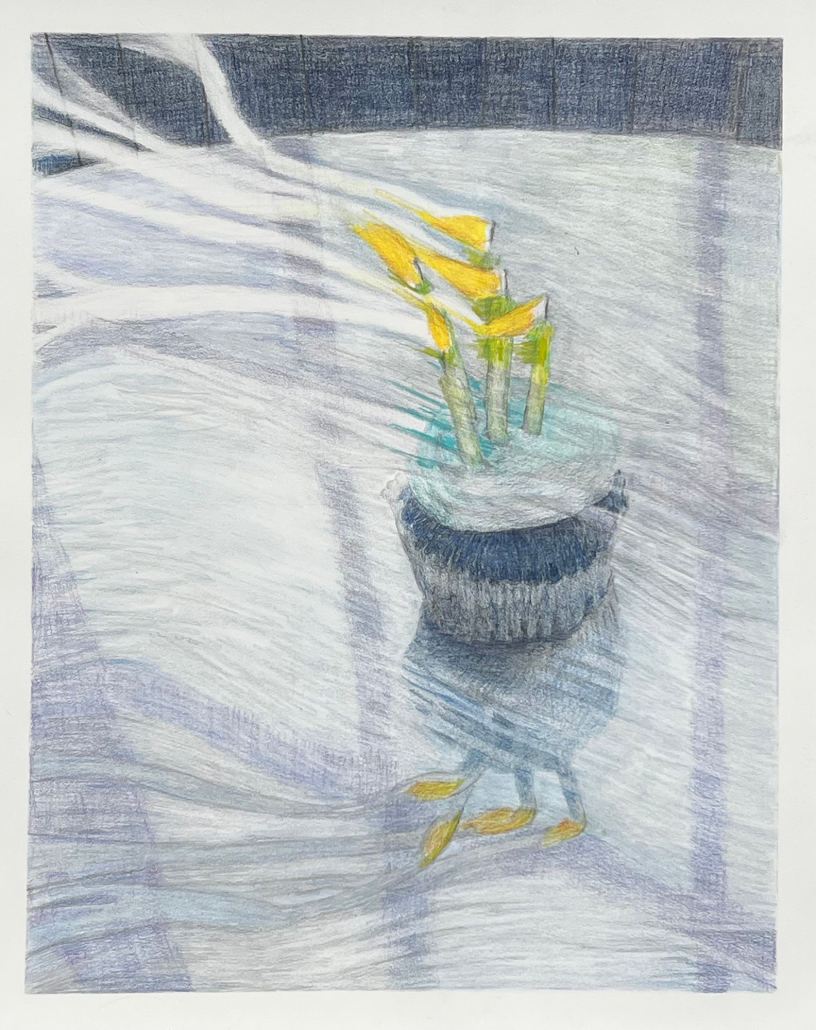
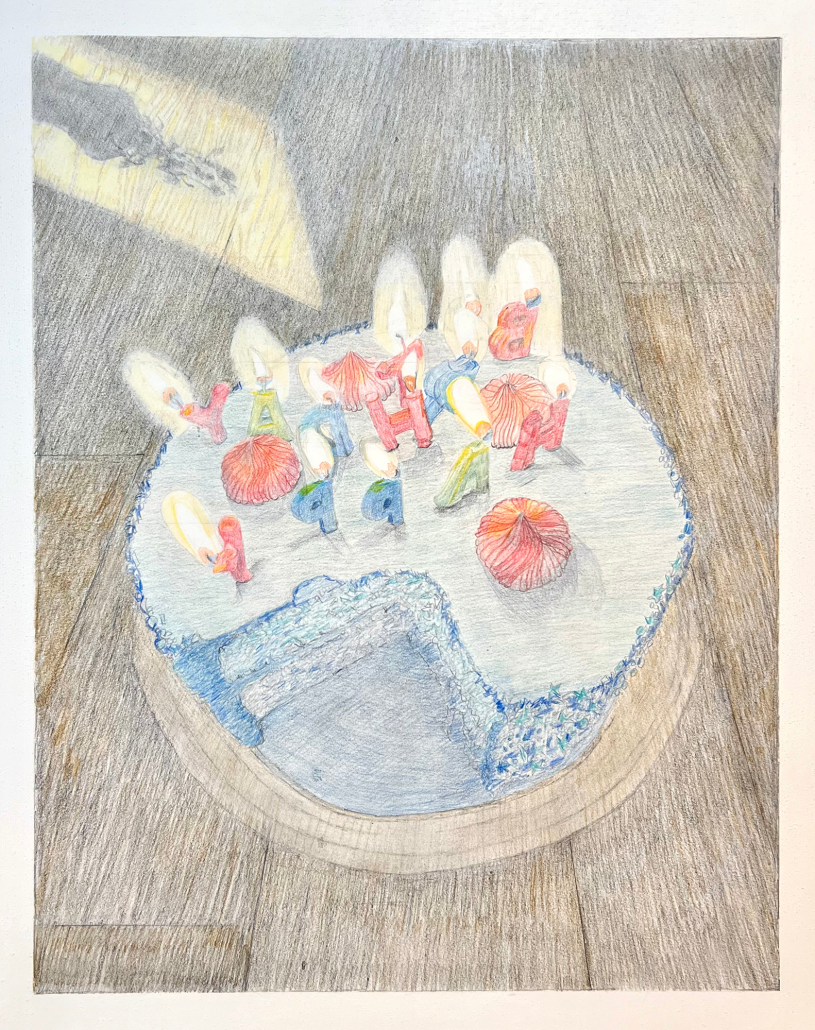
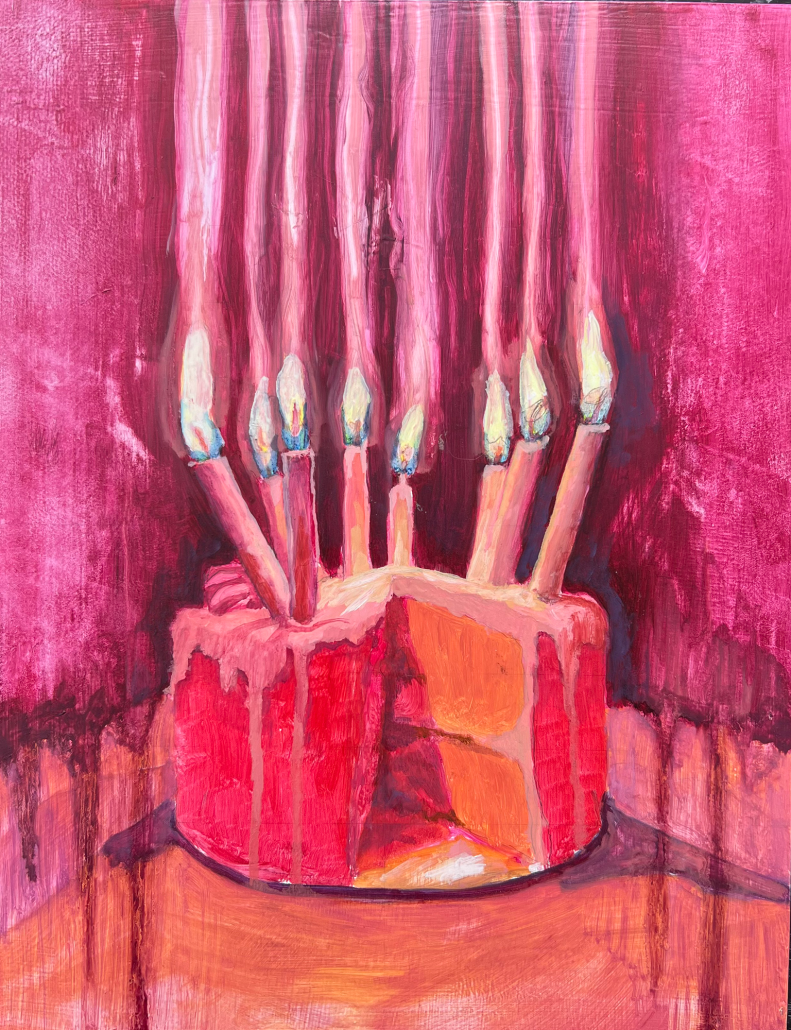
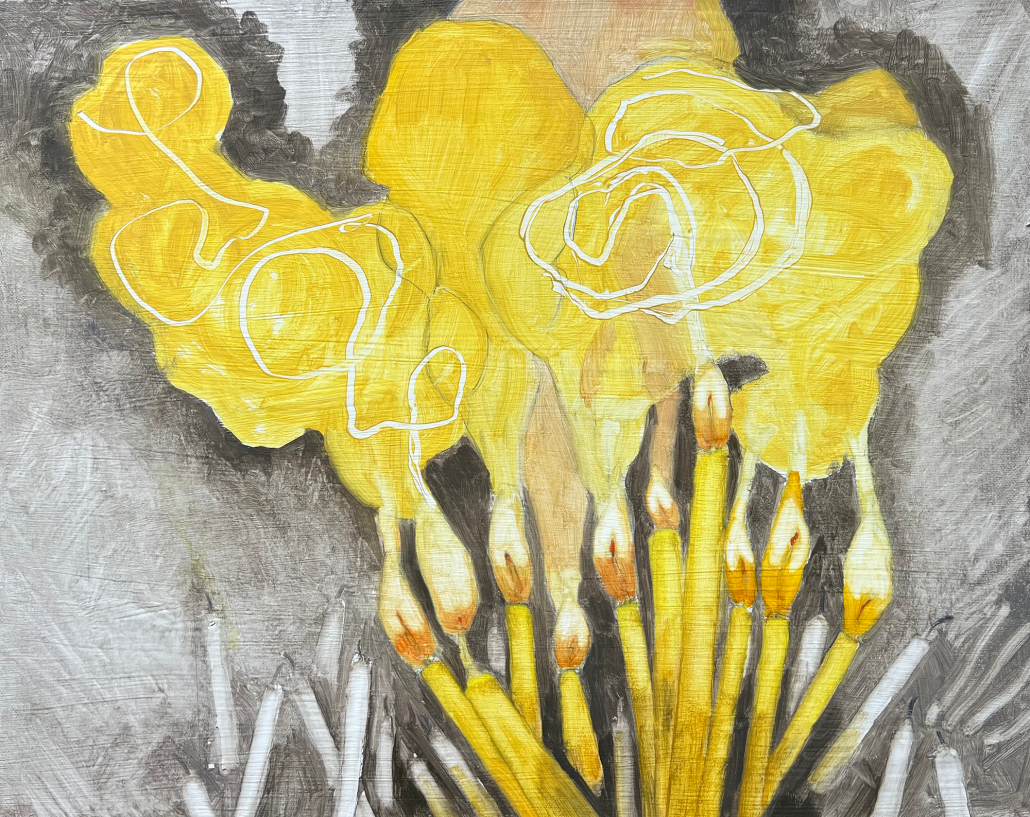
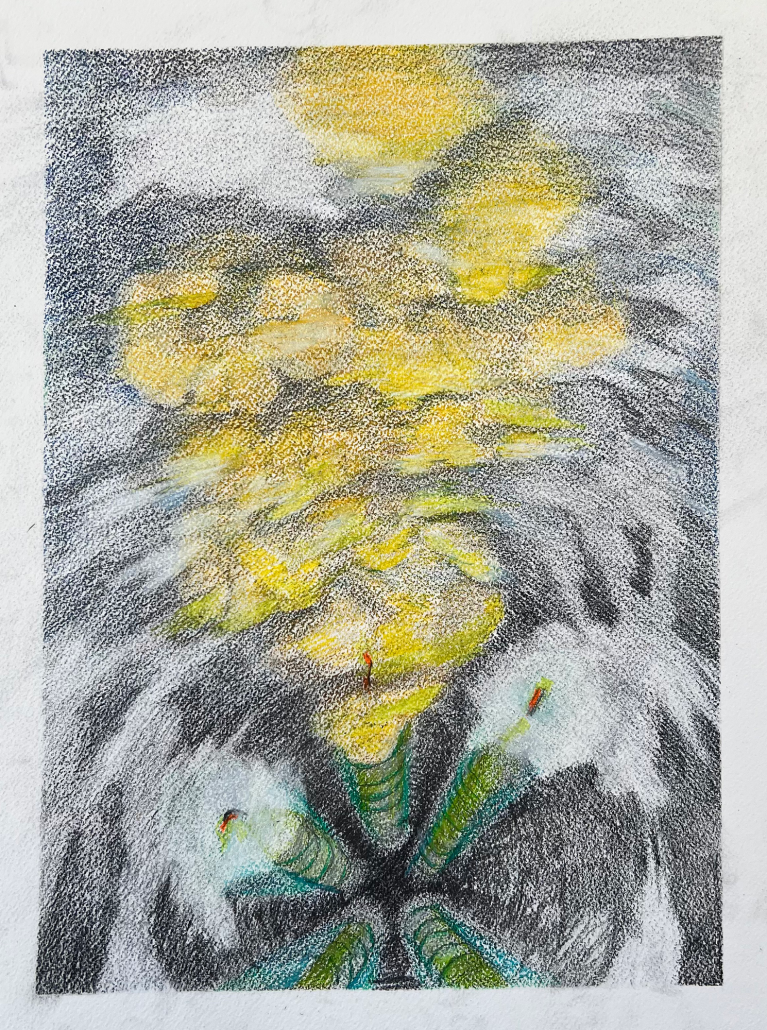
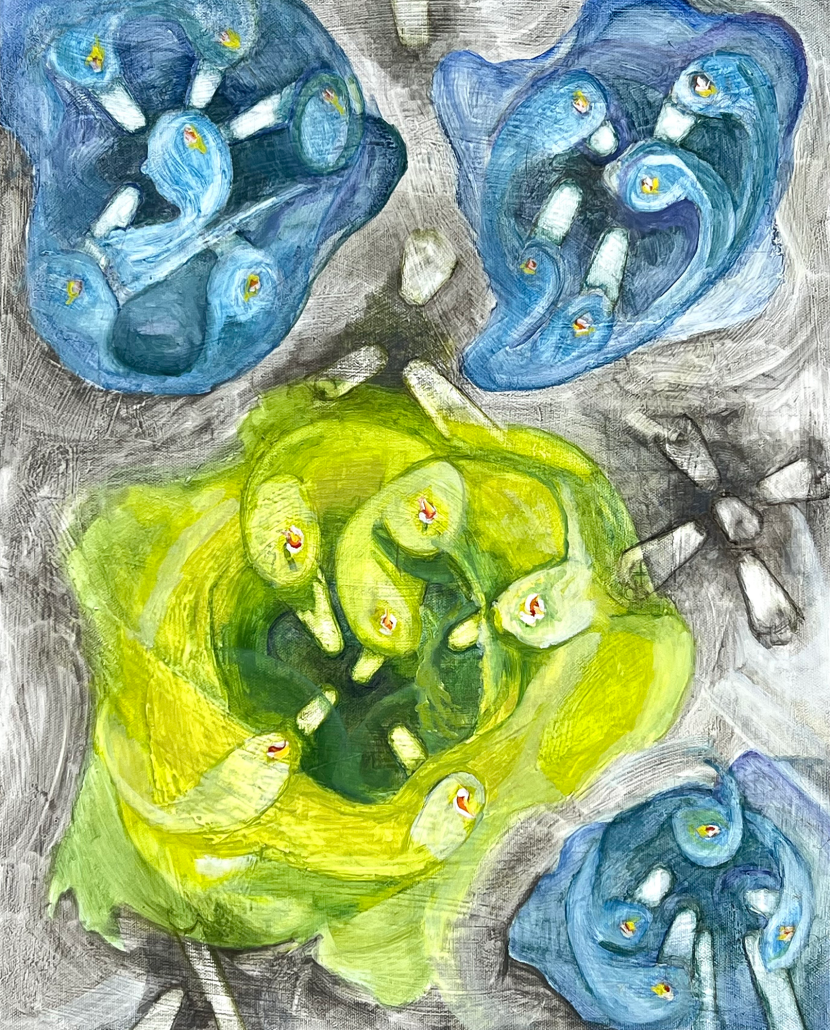
Karen: Thank you. I’m glad that you are interpreting it like this. The birthday cake or cupcake is a familiar cultural spectacle of sugary cake, candlelight, and smoke. I drew and painted it/them again and again, removing the birthday cake out of its customary context, contemplating each component, deconstructing it then putting it back together. The ritual object became less about performance or pageant … and more a simple ‘measure of time. Each new candle and soft flicker of flame just symbolizes the passing of years and the quiet accumulation of wisdom and experience.
The gentle quality you’re describing isn’t only about nostalgia or memory, but also a kind of resistance. In a contemporary culture that often emphasizes excess, speed, and surface-level celebration, I’m interested in something quieter—an attention to aging, accumulation, and time passing. The softness in the work is a way of reframing how we value those experiences, rather than rejecting them or turning them into spectacle.
Liz: Is your choice of colored pencils and your lyrical palette a method of reinforcing the message of welcoming instead of raging against aging?
Karen: That is an interesting point about the palette. Maybe I did that subconsciously. Pencil and paper are also a perfect medium for talking about time. The pencil can smear or be erased. The paper can fade, turn yellow, or decay unless cared for scrupulously. The materials reinforces the subject matter of time passing.
Liz: The images of smoke are so interesting. The candles are still burning but the smoke seems to presage their inevitable extinguishing. Can you say something about that?
Karen: Two things- firstly, when candles burn, the “smoke” that we see is just one component of what is released during combustion. In some of the images I wanted to include the components that aren’t necessarily directly visible- the heat, the water droplets, the particles. All the things that we don’t necessarily see.
– Secondly… and I think what you are referring to- the linear narrative of the birthday party. The birthday party follows a very specific sequence – a decorated cake is presented, a wish is made, the candles are blown, visible smoke appears, and the cake is eaten. I became interested in disrupting this time sequence by collapsing all of those moments together.
The smoke is particularly important in that regard. The candles are still burning, but the visible smoke already signals their extinguishing—it holds that tension between presence and disappearance. It’s both dissolution and presence at the same time, a visible trace of impermanence and transition.
Liz: You have many bodies of work but have limited my questions to the birthday cake series, although it would be interesting to know how you think these pieces relate to some of the work that you have done while in Wyoming showing animals and the woods.
Karen: Both the birthday cake series and the Wyoming landscapes began from thinking about aging and attention. A few years ago I noticed changes in my own focus and memory—moments where thoughts and recollections would surface unpredictably. I initially attributed this to aging, and I became interested in how memory interrupts linear experience, almost in a Proustian sense, like a world filled with accidental triggers.
The birthday cakes deal with time as a structured ritual—very specific sequences of celebration that I then collapse or hold simultaneously. In contrast, the Wyoming works, particularly the nocturnal hikes and wooded landscapes, come from a more dispersed, disoriented experience of time and perception. They reflect detours in thought, uncertainty, and the feeling of being slightly unmoored.
More recently, I’ve also been thinking about how this kind of cognitive fragmentation may not be only personal or age-related. Contemporary conditions—social media, AI-generated realities, and systems of misinformation—can produce a similar sense of distortion and interruption in attention and memory. So both bodies of work, in different ways, are concerned with how we experience and misread time, memory, and perception.