Leah Gauthier
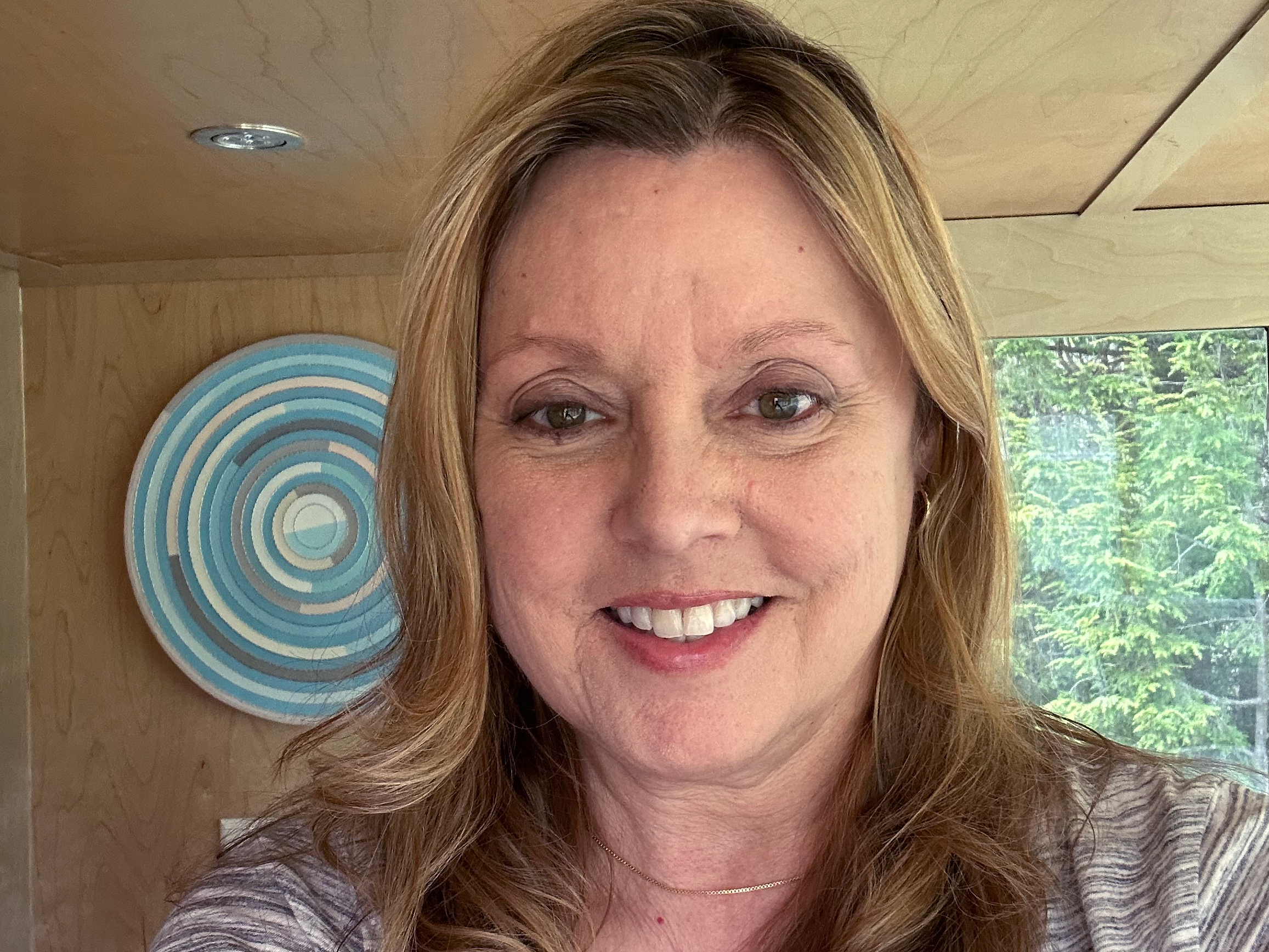
Interview of Leah Gauthier by Andrea Wenglowskyj
Leah Gauthier is an intermedia artist living and working in Maine. She makes wild-inspired embroidered paintings, living sculpture, and often edible community works exploring resilience in the wake of climate change, food migration, and her dreams of an interspecies centered future.
Andrea: Your work moves between embroidery, sculpture, installation, painting and edible community projects. How do you decide what form an idea needs to take?
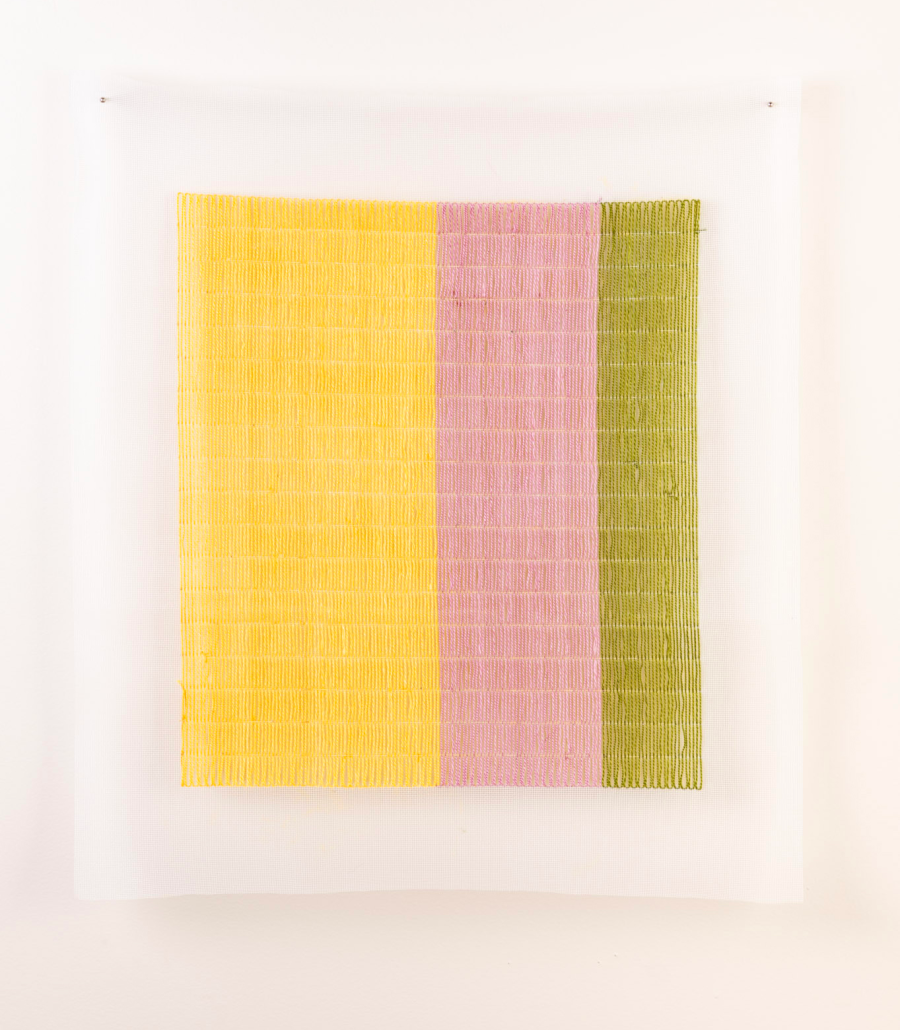
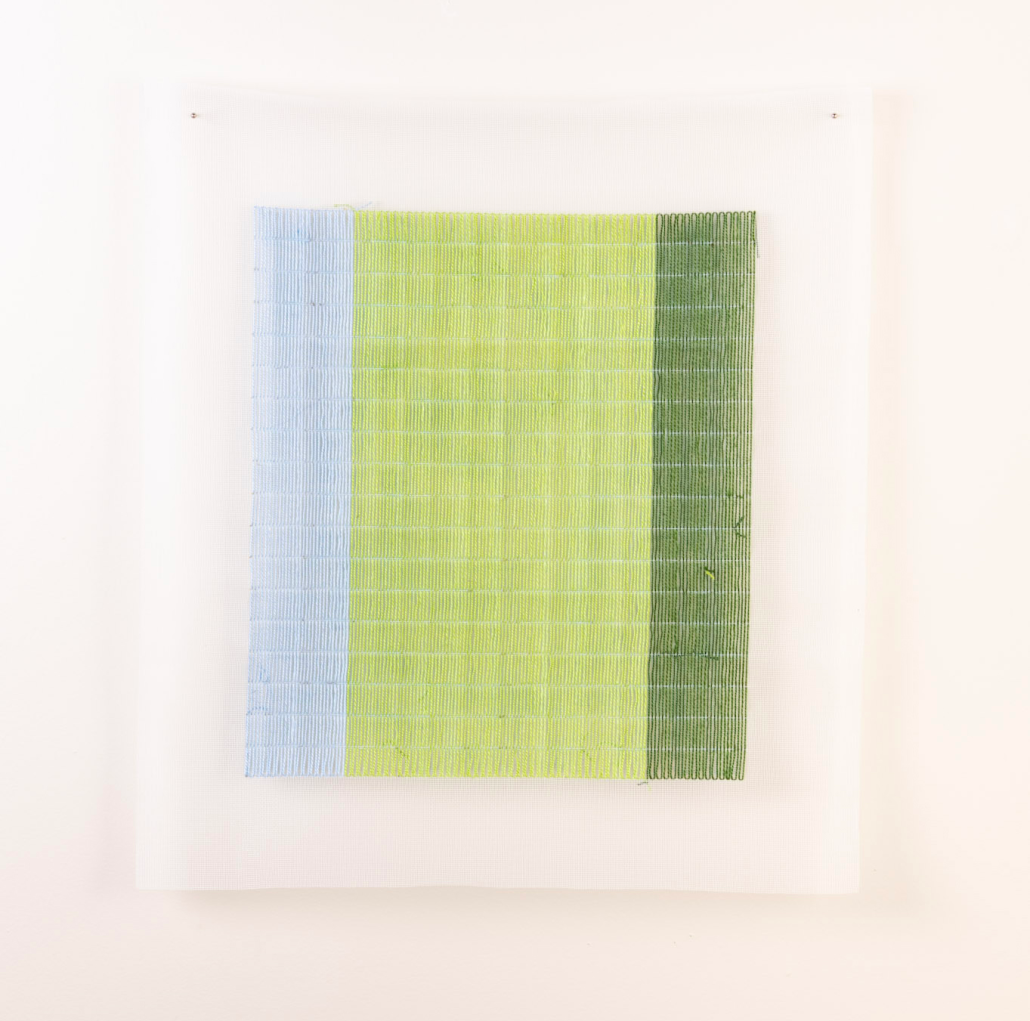
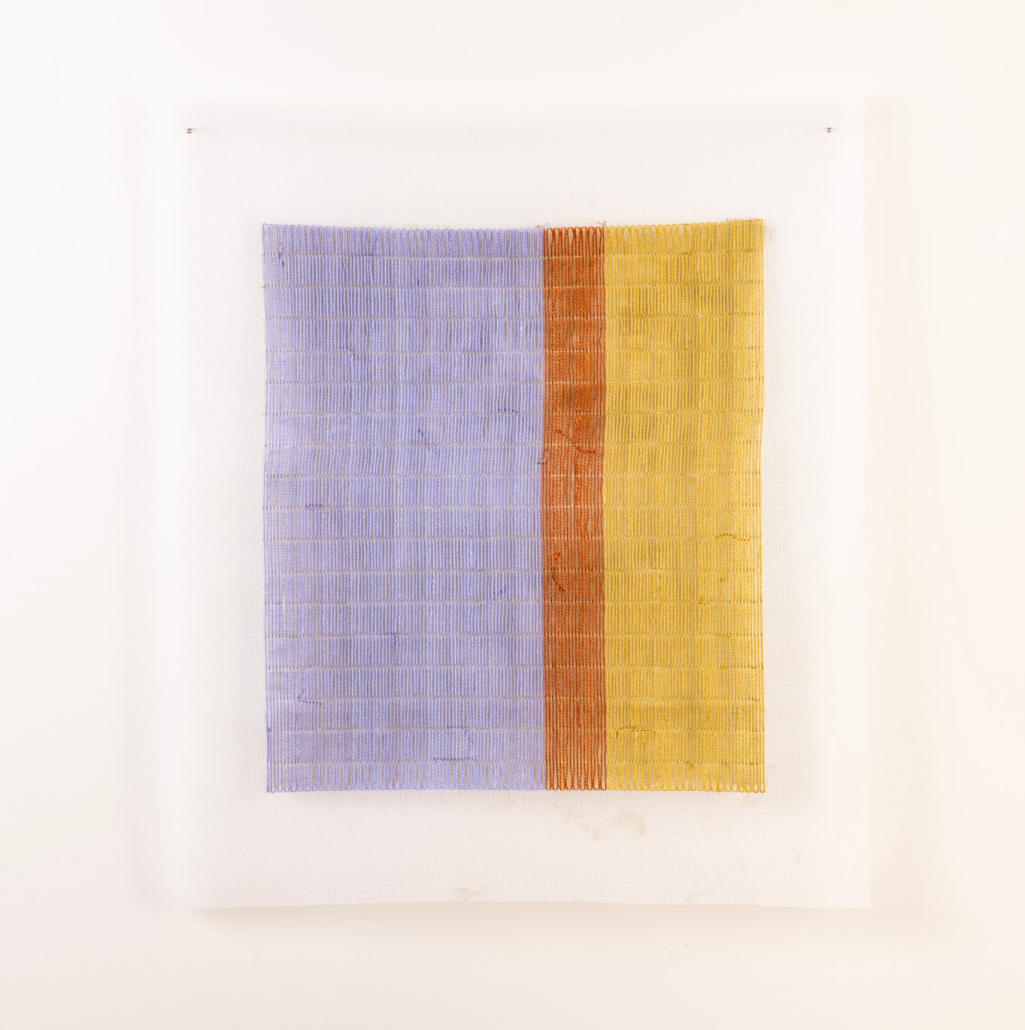
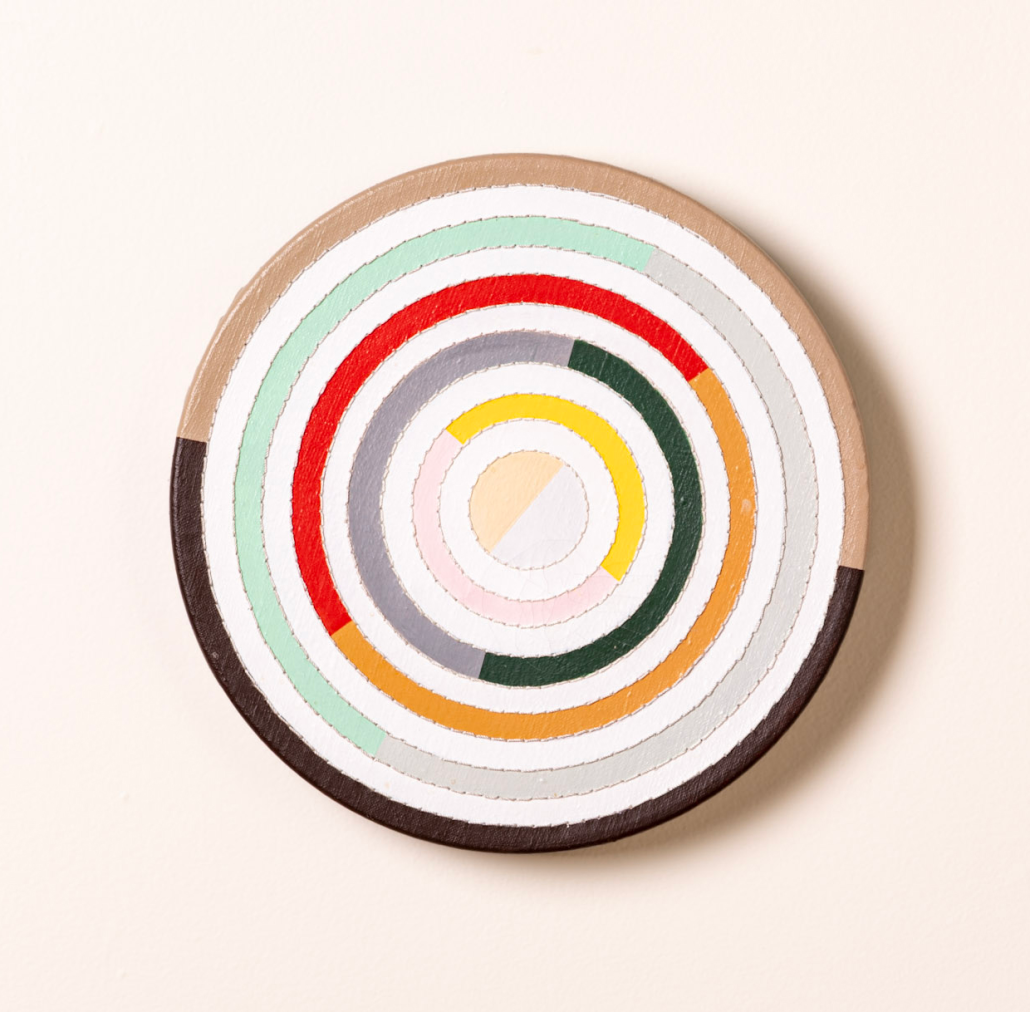
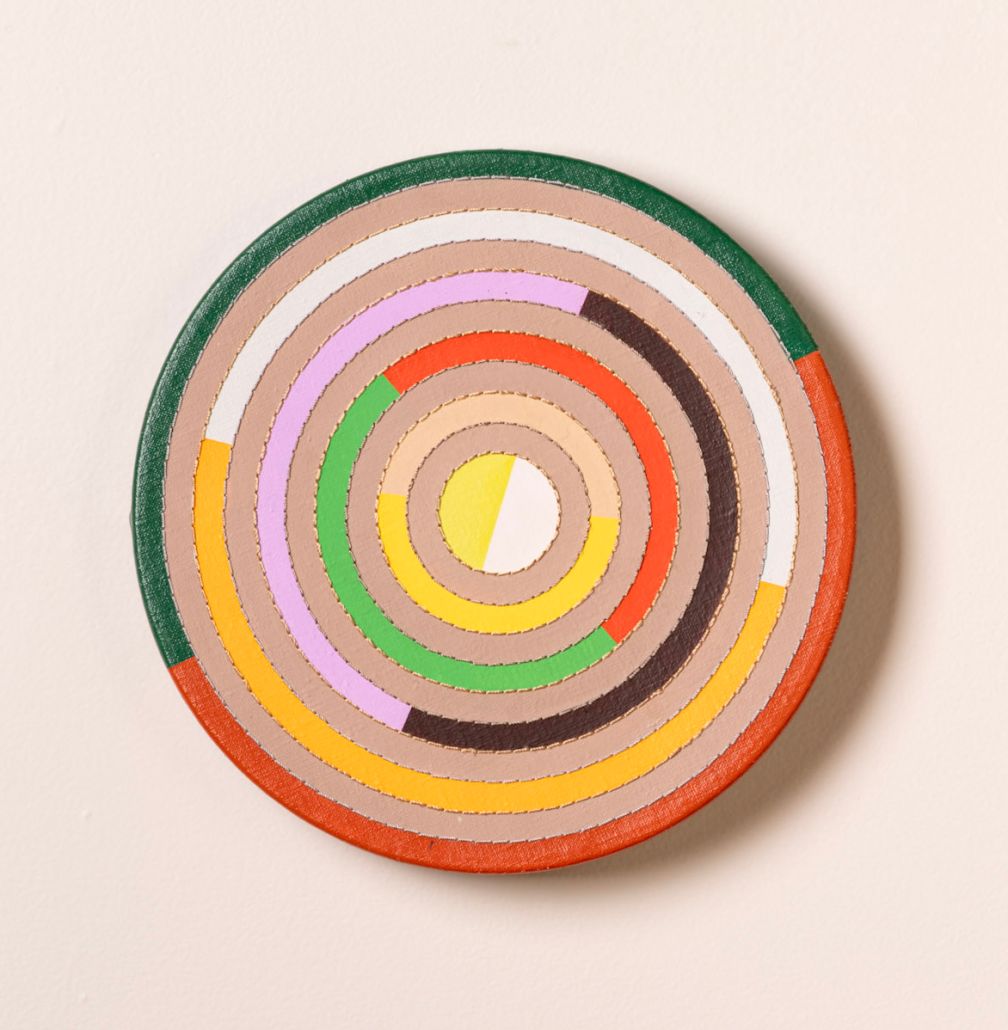
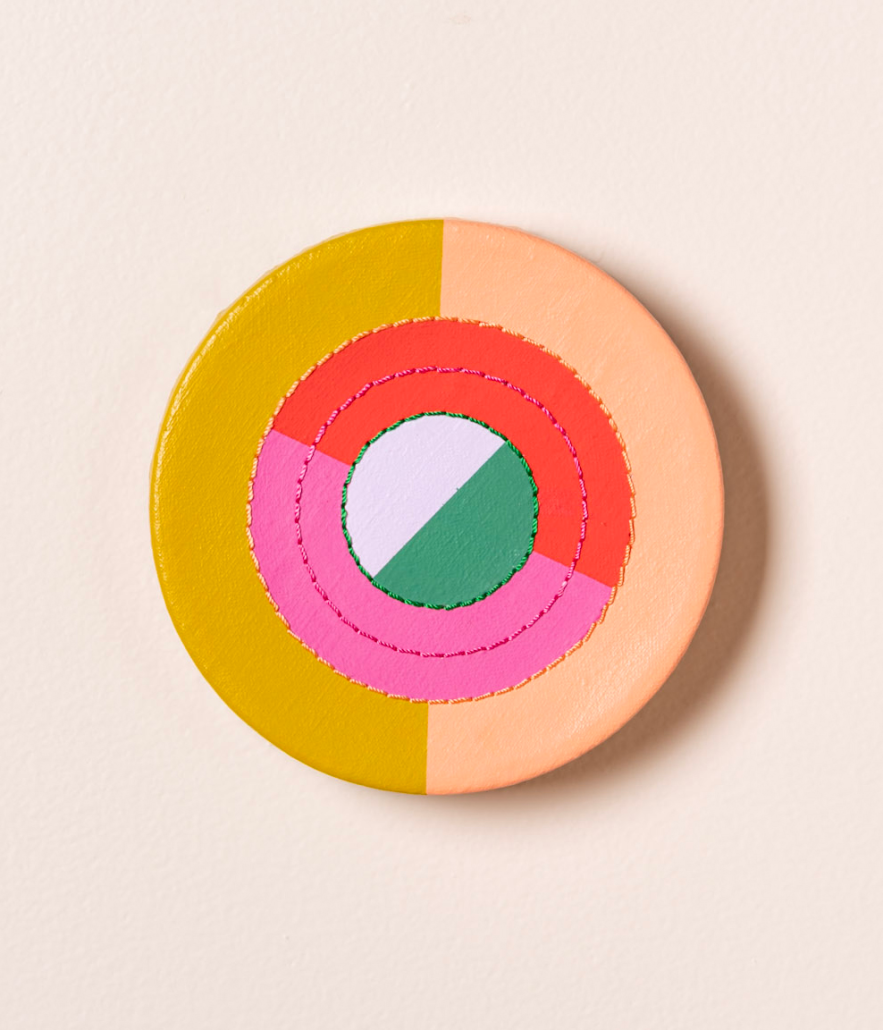
Leah: Much of my work is conceptually driven, and the decisions around what form those ideas take are informed by materials, place, color, and time. I often begin by asking what the most impactful means of expression might be, what form best allows the idea to fully exist. Sometimes that becomes embroidery on painted window screens, where the material itself carries meaning as a membrane between inside and outside. Other times it becomes sculpture with living plants, installation, or community-based edible projects where participation and care are essential to the work.
I’m interested in how materials hold metaphor and memory, and I try to let that guide the process rather than forcing an idea into a predetermined form. Seasonality also plays a large role as certain colors, plants, and gestures only make sense at particular moments in time. The work often reveals its own medium through that process of attention.
Andrea: What are you working toward right now that feels risky or new?
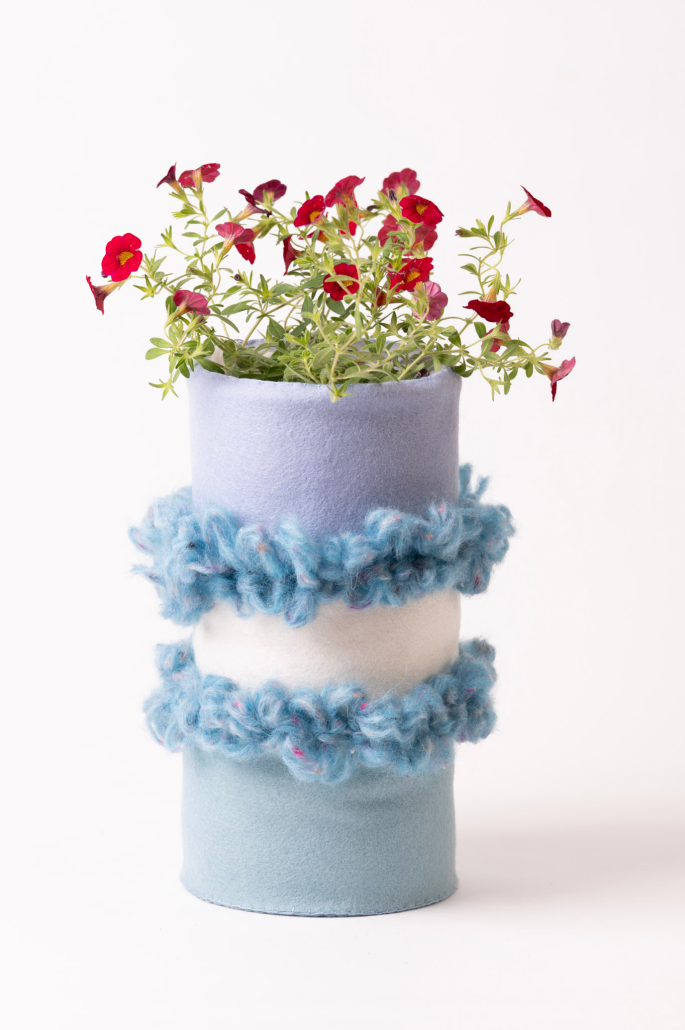
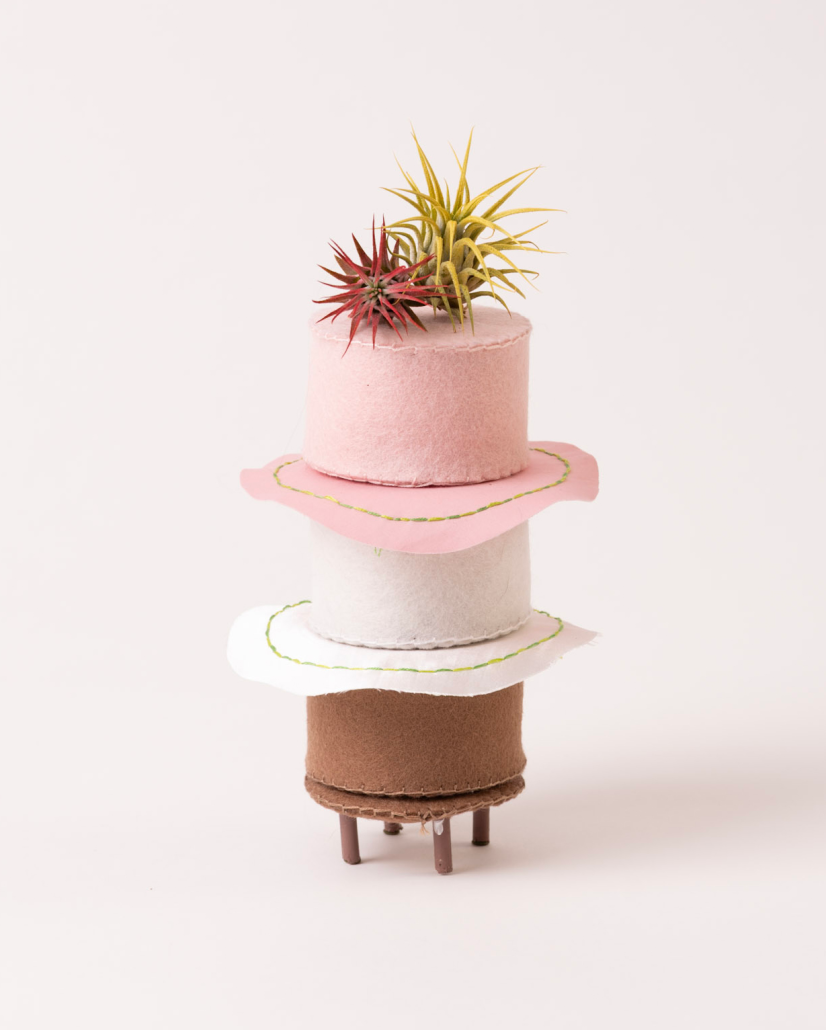
Leah: What feels most risky and new to me right now is the work I’m making with my houseplants. I’ve been thinking about care, reciprocity, and what it means to be in relationship with living things that are often treated as decoration or background. Bringing live plants into the work asks me to relinquish a certain amount of control as they grow, decline, respond, and change on their own terms.
That unpredictability feels important. It shifts the work from being purely object-based into something more collaborative and time-based. I’m interested in how sculpture can become a site of mutual dependence rather than a fixed form. The plants require attention, patience, and adaptation, and that care becomes part of the work itself.
There’s also risk in allowing vulnerability and slowness to remain visible. Working with living material means accepting impermanence, failure, and change as part of the piece. That feels both challenging and necessary to me right now.
Andrea: You have often used live plants in your work. How do they create an impact for your viewers? Do they provide any challenges?
Leah: Live plants bring a kind of immediacy and vulnerability into the work that static materials cannot. People recognize them as living beings. They carry their own time, needs, and fragility, and that shifts the way viewers relate to the piece. There’s often an instinct to move closer, to check if something is thriving, to notice light, moisture, or change. The work becomes less about observation alone and more about awareness and relationship.
I’m interested in how plants disrupt the traditional boundaries between sculpture and care. They ask for maintenance, attention, and responsibility. They are not symbolic stand-ins; they are active participants. That creates both practical and conceptual challenges. Practically, there is the constant negotiation of light, temperature, transport, and survival. Conceptually, it asks me to reconsider authorship and control, because the work is always changing beyond my intention.
There is also an emotional dimension. Plants carry intimacy. They live in our homes, mark seasons, hold memory, and bear witness. Bringing them into the gallery allows that domestic and emotional language to enter the space, making the work feel more porous, tender, and alive.
Andrea: Can you describe your studio practice right now? What are you making or researching most intensely?
Leah: Right now, my studio practice is centered around researching the history of houseplants and thinking about them as quiet companions within domestic space. I’m interested in how plants function as both decoration and dependency. How they exist within our homes as living presences that require care, while also offering comfort, beauty, and a sense of continuity.
I’ve been thinking a great deal about shelter, both the shelter we create for ourselves and the forms of shelter we extend to other living things. Houseplants complicate that relationship because they survive through our attention, but we also rely on them emotionally and psychologically. That reciprocity of care feels central to the work.
In the studio, I’m testing ways to bring that relationship into sculpture and embroidery, using forms that hold ideas of containment, protection, and exchange. I’m interested in vessels, thresholds, window screens, and structures that act as membranes between inside and outside. Much of the work is asking how care can become visible, How sculpture can hold dependence, maintenance, and mutual survival rather than permanence or control.
Andrea: Your bio mentions “dreams of an interspecies centered future.” What does that future look like to you?
Leah: When I think about an interspecies-centered future, I often return to E. O. Wilson’s Half-Earth project, the idea that half of the planet should be protected for nonhuman life in order for biodiversity to survive. I’m drawn to the ambition of that vision, even while I struggle to imagine humans actually allowing it to happen. We have a difficult relationship with leaving anything alone; we tend to measure value through use, ownership, and control.
Because of that, I don’t envision an interspecies future as a perfect utopian separation where humans simply step aside. Instead, I think about how we might learn to live with greater humility, how we might practice restraint, reciprocity, and attention. What would it mean to build systems that prioritize coexistence rather than extraction? How do we make space for other forms of life not as resources, but as neighbors with their own agency and right to exist?
For me, that future begins less as a grand solution and more as a daily practice of care. It lives in small acts: tending plants, protecting habitat, paying attention to seasonal rhythms, and recognizing dependence rather than pretending independence. I may not believe we will achieve Half-Earth literally, but I think it remains a powerful way to ask how much space we are willing to give back, and whether we are capable of imagining a world that is not centered entirely around ourselves.
Andrea: How do you think art can help people reimagine their relationship to nonhuman life?
Leah: Art can create a space where people slow down enough to notice nonhuman life as something active, intelligent, and relational rather than passive or purely functional. It can shift perception from seeing plants, animals, and ecosystems as background or resource, to experiencing them as participants in shared systems of care, time, and exchange.
For me, part of what art can do is make invisible relationships visible. The dependence we have on soil, weather, growth, decomposition, and seasonal cycles is often abstracted in daily life. Through material presence, especially living materials, art can bring those relationships into the foreground in a more felt and embodied way.
It can also open up emotional access. When something is experienced aesthetically, through beauty, fragility, or attention, it can create an entry point that is not purely intellectual. That shift can lead to a different kind of responsibility, one grounded in care and recognition rather than distance.
Ultimately, I think art doesn’t just represent nonhuman life differently; it can help rehearse alternative ways of being with it. It can model reciprocity, slowness, and attentiveness as lived practices, even if only briefly, and leave those possibilities lingering after the encounter.
Andrea: Are there particular plants, animals, fungi, or ecosystems that repeatedly appear in your thinking?
Leah: Yes, my thinking keeps returning to houseplants and the ways they move between decoration, care, and survival, especially how responsive they are to subtle shifts in light, temperature, and attention. I’m also drawn to forest ecologies, particularly the understory such as mosses, ferns, and slower systems shaped by shade, moisture, and decomposition.
Living in a place with dramatic seasonal shifts has made me more attuned to rhythms, growth, dormancy, decay, and renewal as recurring structures rather than exceptions. That awareness extends to the ocean as well, where change feels constant but cyclical in its own way: tides, weather patterns, and shifting edges between land and water.
More recently, I’ve been thinking about climate change over time as something you notice not in a single moment, but through accumulated seasonal differences, what blooms, what disappears, what no longer returns. Across all of this are pollinators, soil systems, and fungi, the unseen networks that make visible life possible and insist on interdependence as the condition of survival.
Andrea:What does collaboration with the natural world mean in practical terms within your work?
Leah: In practical terms, collaboration with the natural world means designing the work in a way that leaves room for living systems to act on their own terms rather than simply serving as material. When I collaborate with plants, for example, I’m trying not to fix them into a final state, and working with their ongoing needs for light, water, space, and time, and allowing those conditions to shape what the work becomes.
It also means accepting unpredictability as part of the process. Growth, decay, seasonal change, and even failure are not disruptions to the work, they are the work. That requires a kind of ongoing responsiveness in the studio: adjusting, tending, and listening rather than controlling.
More broadly, it involves building structures of care. Whether through gardening, maintaining planted elements in installations, or thinking through materials that hold moisture, light, or permeability, I’m interested in how sculpture can function as a kind of shared environment rather than a fixed object. Collaboration, for me, is less about representation and more about making space for reciprocity, where the natural world is an active participant in shaping form, time, and outcome. It’s a challenge given how short gallery shows are. How might I show evidence of something that is unfinished, and ongoing and still have that be engaging? I’m asking those questions of myself right now.
Andrea: Embroidery/Handcraft carries histories of domestic labor, care, and slowness. How do those associations influence your practice?
Leah: Embroidery and handcraft are important to me because they carry a history of labor that is often overlooked, work tied to care, maintenance, repair, and the domestic sphere. These are practices that have traditionally been undervalued precisely because they are associated with women’s work, repetition, and usefulness rather than spectacle. I’m interested in reclaiming that language and allowing slowness itself to become a form of resistance.
The act of stitching requires attention and time. It cannot be rushed without changing the nature of the work. That pace mirrors many of the ideas I’m thinking about such as seasonality, plant growth, maintenance, and forms of care that unfold gradually rather than dramatically. Embroidery allows me to work in a way that feels physically connected to those rhythms.
I’m also drawn to the intimacy of it. Stitching is close work; it asks the body to remain present. When I embroider on painted window screens for instance, the material itself adds another layer, the screen becomes a membrane between interior and exterior, protection and permeability. That combination of handwork and material history allows the work to hold both personal and ecological meaning, connecting domestic care to larger questions of shelter, reciprocity, and survival.
Andrea: What kinds of experiences outside the art world most shape your work?
Leah: The experiences outside the art world that shape my work most deeply are often the quiet, daily ones, gardening, cooking, time spent in forests, with my daughter, and the ongoing practice of trying to live more sustainably and attentively. These are not separate from the work for me; they are where many of the ideas begin.
Gardening has taught me patience, reciprocity, and the reality that care is ongoing rather than finished. You cannot rush growth, and you cannot control everything. That relationship to time and maintenance carries directly into my studio practice. Cooking feels similar. It is another form of transformation, attention, and nourishment, where materials are seasonal, temporary, and deeply tied to memory and community.
Spending time in forests has changed the way I think about scale and coexistence. It reminds me that human life is only one small part of a much larger system of exchange and dependence. I’m interested in those quiet ecologies and the intelligence of natural systems that exist without our intervention.
I’m also deeply influenced by beauty in all its forms, color, light, texture, arrangement, the way something blooms briefly and then disappears. Beauty is often dismissed as superficial, but I think it can be a powerful entry point into care. When something feels beautiful, we are more likely to notice it, protect it, and remain in relationship with it. That attention feels central to both my life and my work.
Andrea: Has living and working in Maine changed the way you think about landscape or community?
Leah: Living and working in Maine has made me much more attentive to seasonality and to the physical realities of landscape. The shifts between seasons are undeniable here, light changes dramatically, plant life appears and disappears with urgency, and winter demands a different kind of awareness and preparation. That rhythm has deeply influenced the way I think about time in my work. Color, growth, and even certain materials feel tied to specific moments, and I’ve become more interested in honoring that impermanence rather than resisting it.
Maine has also changed the way I think about community. There is a strong sense of mutual reliance here, especially in the winter months, and that has reinforced my interest in care as both a personal and collective practice. I think more about maintenance, repair, and the quiet labor that sustains both households and ecosystems.
Landscape here doesn’t feel like a backdrop. It’s active and present, something I am constantly negotiating with rather than simply observing. That has pushed me to think less about nature as something separate from human life and more about how deeply entangled we already are within it.