Andrea Wenglowskyj
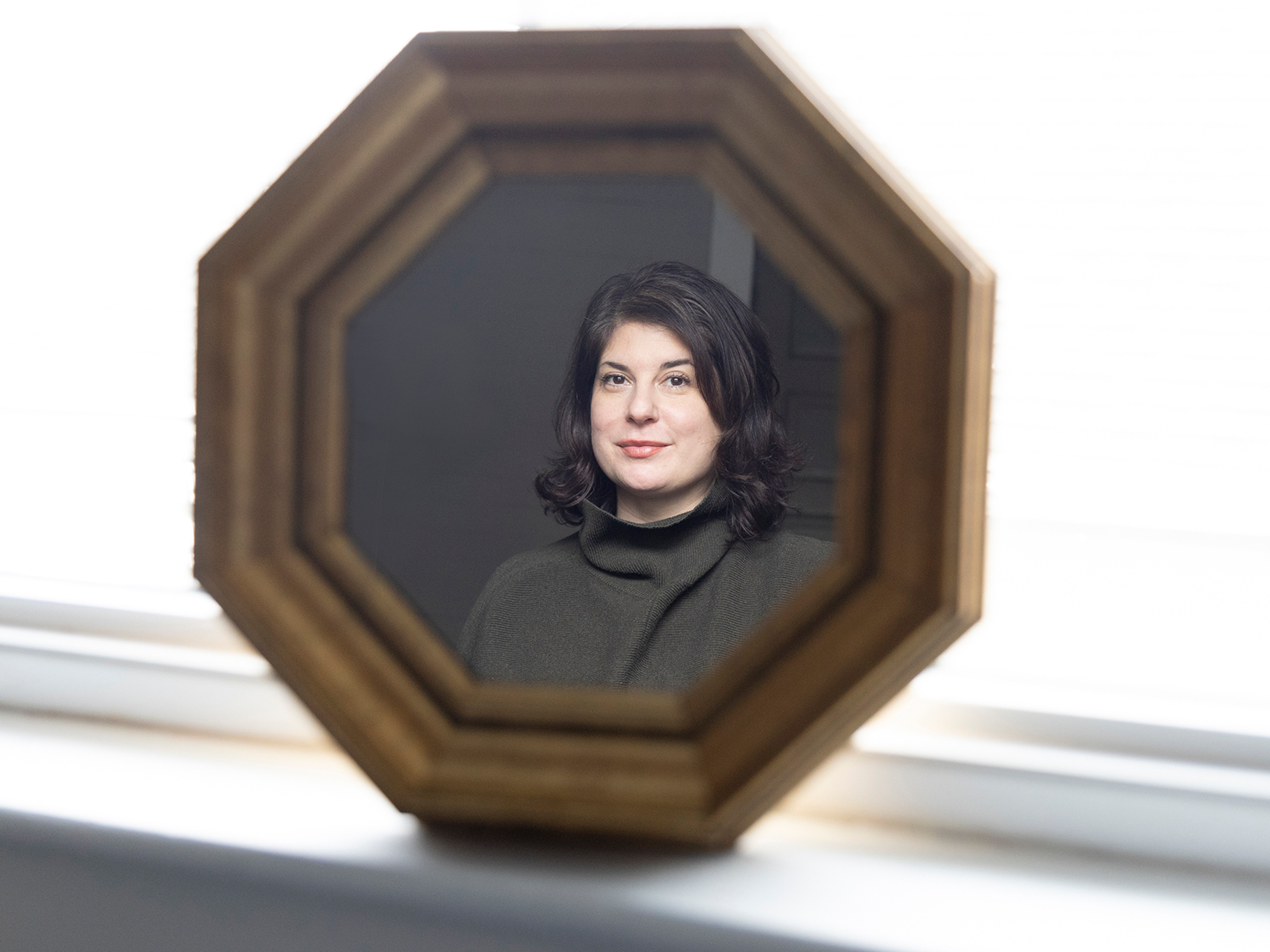
Interview of Andrea Wenglowskyj by Karen Rosenkrantz
Andrea Wenglowskyj is a mixed media artist, photographer and writer. Her work explores how collective memory, traditions, language, and community are shaped by war, authoritarianism, immigration, assimilation, and diaspora through the lens of her own Ukrainian-American experience. Her work moves fluidly through photography, collage, printmaking, writing, and archival practices.
Karen: I have read about your artistic process in creating the collaged images that are included in this show. Can you elaborate on that and the selection of the specific prints within the collages? Can you describe your decision making as you research and collect the archival prints, and the process of pairing the prints in dialogue in each of the finished images? And among the finished images?
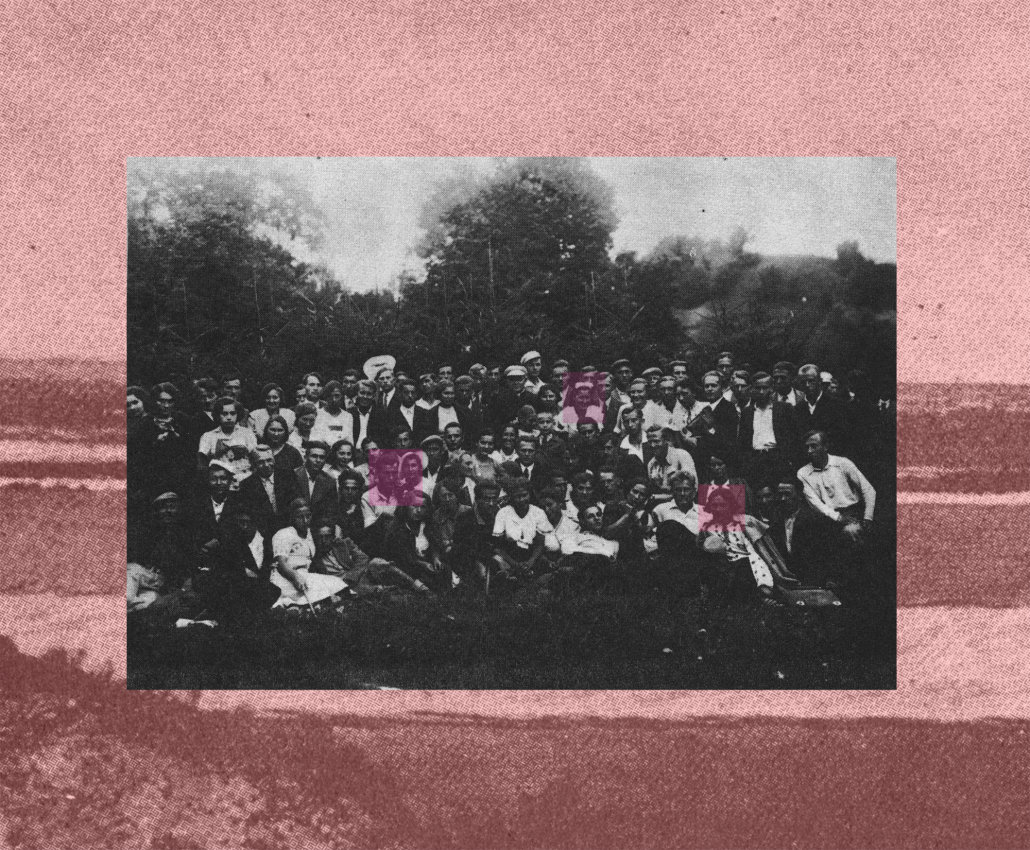
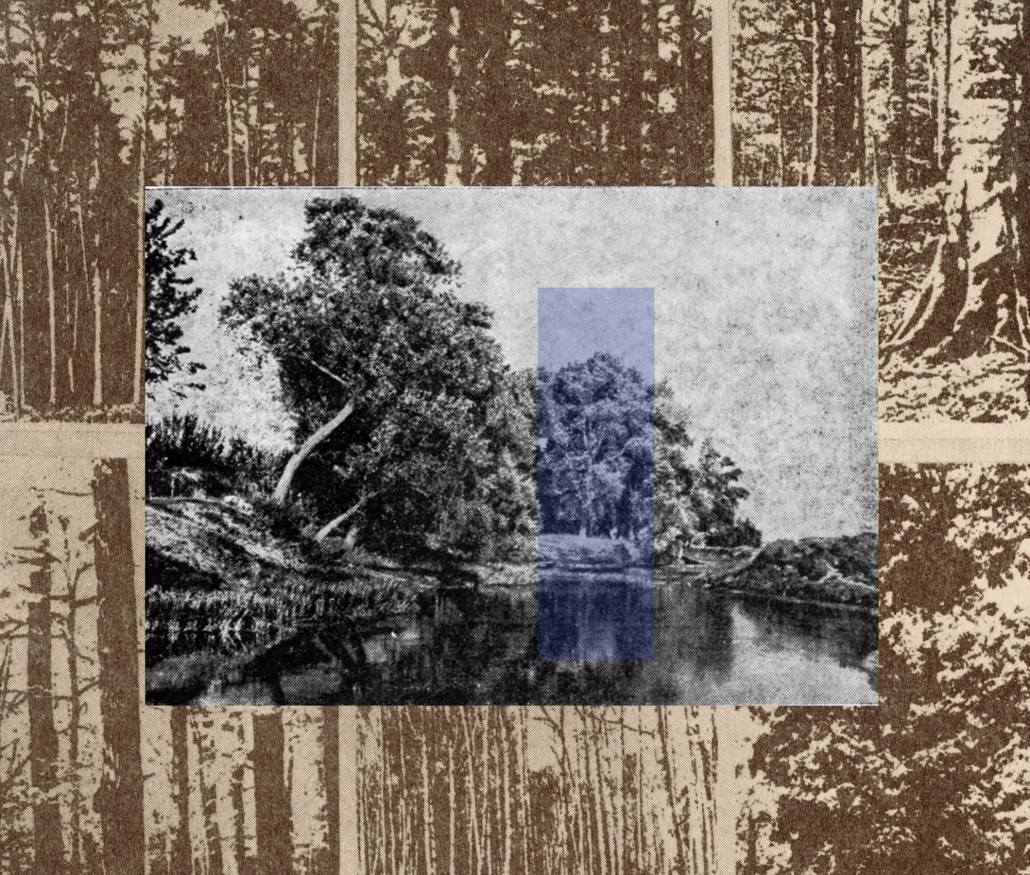
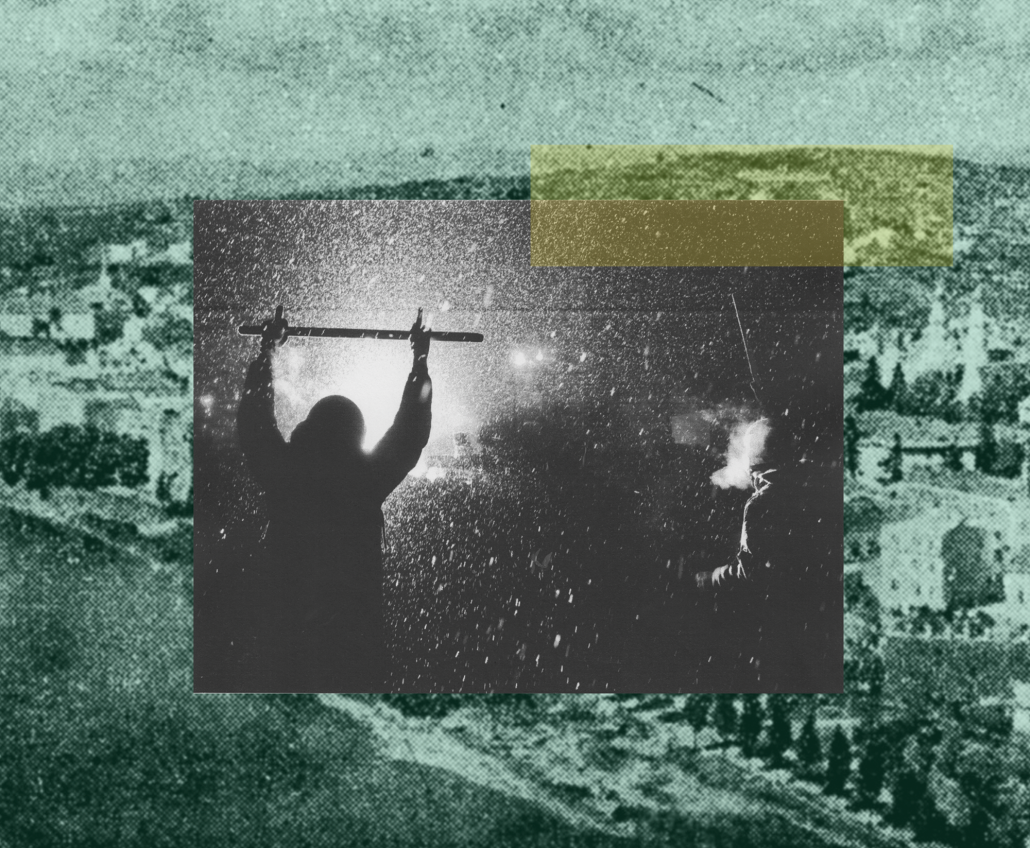
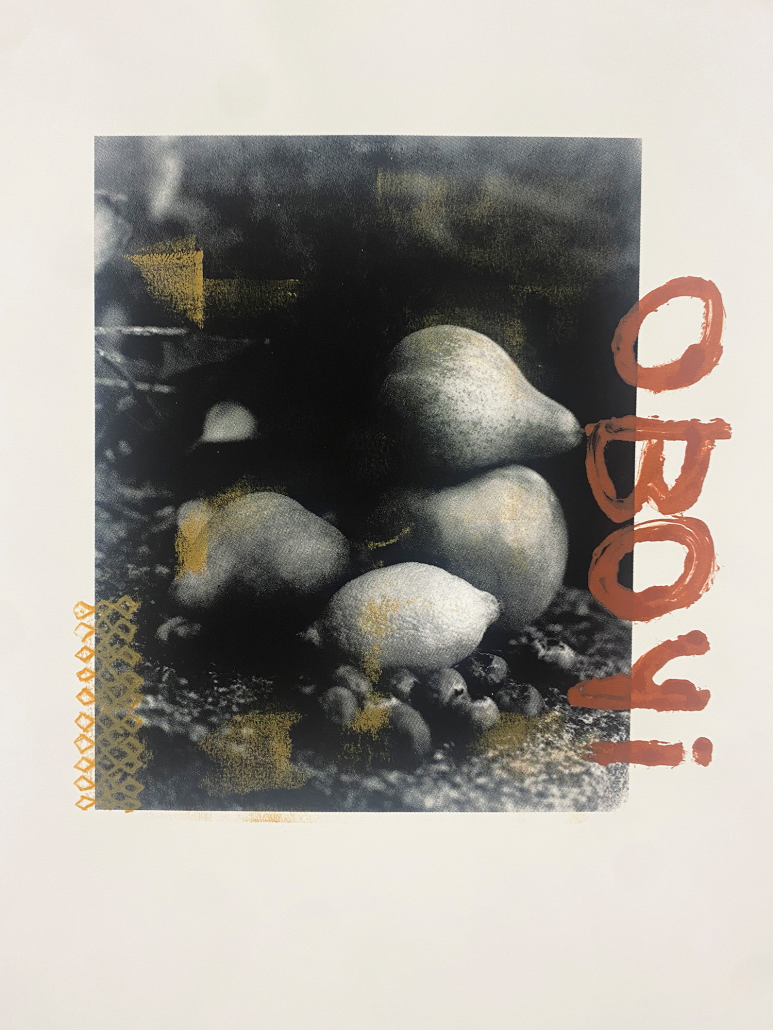
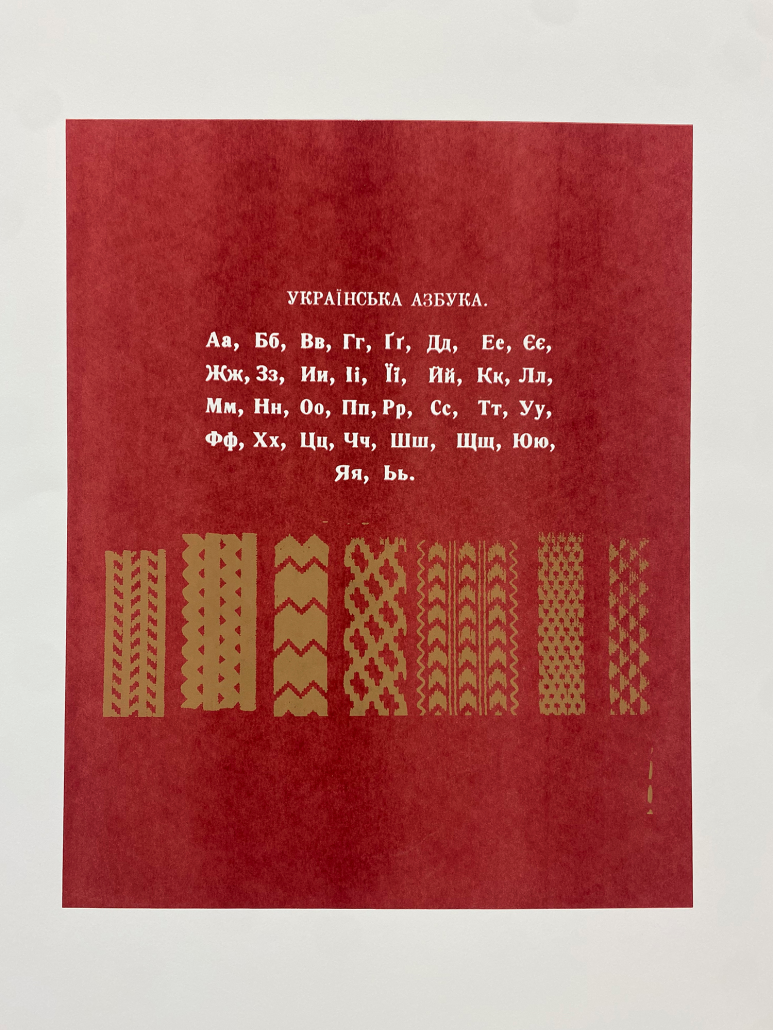
Andrea; For Here, Still, the color background images are scanned from textbooks I used while attending Saturday Ukrainian school as a kid in Rochester, New York. Written in Ukrainian and printed in the United States during the 1960s and 1970s, these books were often hand-me-downs from my older sisters by the time I used them in the 1990s. In addition to geography, we studied Ukrainian history, grammar, and literature. At the time these books were produced, such subjects were not freely taught in what is now Ukraine. Then part of the Ukrainian SSR (1922–1991), the region experienced suppression of Ukrainian language and national culture in favor of r*ssification and forcing a dominant Soviet identity.
I wasn’t thrilled to be forced to sit in school on Saturdays, and the value of this juxtaposition of culture was totally lost on me. One of my favorite books, however, was the Introduction to the Geography of Ukraine because it had these tiny 2 x 4 inch photographs of idyllic Ukrainian landscapes. I longed to leave the boring, stuffy classroom and just jump into them, no matter how muddy the image. Now I understand that these were black-and-white film photographs reproduced in the books through a manual, labor-intensive process known as photo-offset lithography. To prepare them for printing, the original images were rephotographed and translated into halftone dots, creating new negatives for reproduction. Despite their small scale and loss of clarity, the images retain a sense of their original beauty. They convey a deep affection for the country—its land, resources, and climate—echoing the care and attention with which these subjects are described throughout the books.
Fast forward to today: seeing the halftone dots in the enlarged scans returns me to that tension. While I sat in an old church classroom in Rochester, New York, learning about Ukraine in such depth, people living within the suppressed culture of the Ukrainian SSR were being punished for expressing their language and culture, and many may have grown up without identifying as Ukrainian.
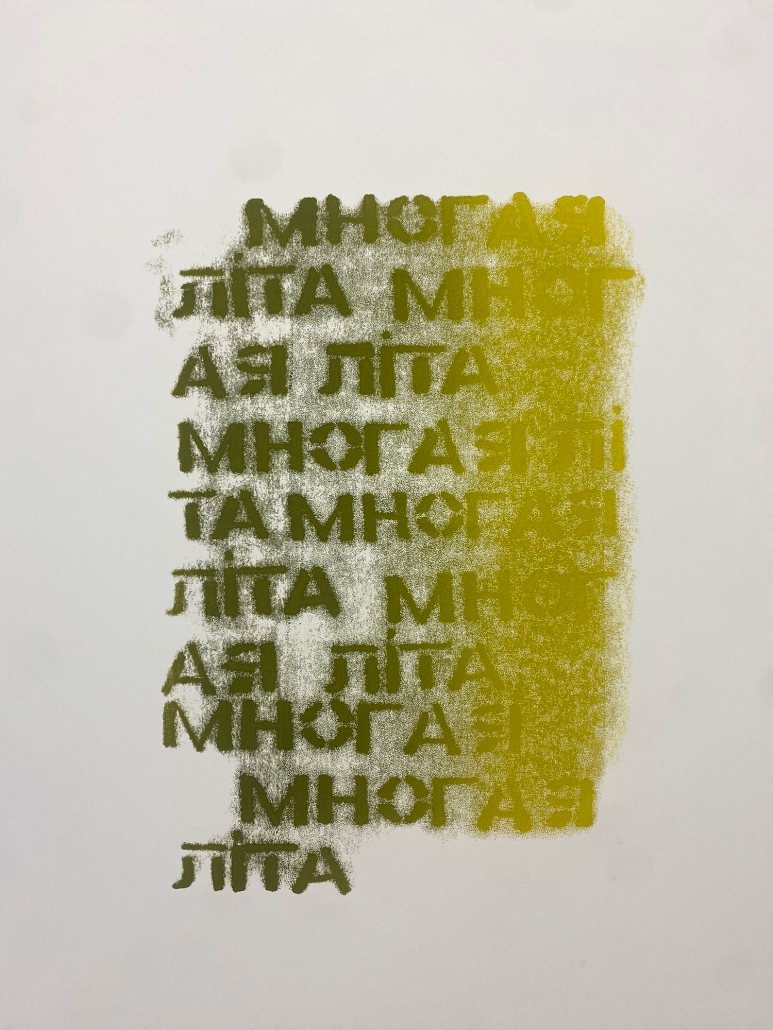
The images and colors I choose are instinctual, and I was also conceptually led by a quote from a poem that makes up the titles of the triptych: “Let me live, Let me love, Let my heart live,” by Taras Shevchenko.
The screenprinted black and white images vary as far as their sources. They come from other books and a scan from a newspaper clipping during the Euromaidan Revolution in 2014.
On top of the images I have added transparent color blocks as a third layer, like little portals. For me, this provides visual balance and adds my own mark to the archival imagery.
Karen: Your body of work explores how collective memory, traditions, language, and community are shaped by war, authoritarianism, immigration, assimilation, and diaspora through the lens of your Ukrainian-American experience. Can you talk about your identity as a Ukrainian-American?
Andrea: My life growing up was shaped by the value of having a family born in Ukraine, while my sisters and I were born in the United States. It was part of my every day – language, food, community, the stuff in my house, and the things I did. We grew up with the stories of why my grandparents fled Ukraine with their small children and how they persevered. I did have a very American suburban life but Ukrainian heritage was the focal point of pride and commitment for my family, so it’s just the lens I see through. As I got older, I started to examine this in a more conceptual and critical way, and this is how it seeps into my art making.
By now, Ukraine is more familiar to the general public due to the war, and more folks can point it out on a map and hopefully understand that it has it’s own language and culture that are indeed not r*ssian. Ukrainians are still trying to reclaim their culture everyday and I witness this in the diaspora and in Ukraine. I have always been fascinated by the different versions of Ukrainian culture** that people within one country may identify with based on geography, date of birth, education, or family history. It is endlessly fascinating, heartbreaking, infuriating, and deeply important to me. I don’t think I will ever stop making work about it. In many ways, I feel as though I am only just getting started.
**To be clear, I am generalizing Ukrainian culture as: art, food, language, customs, religion, politics, etc.
Karen: Is there a large Ukrainian-American population in Buffalo? How are traditions, culture, and language preserved in your family and in this community against the onslaught of American homogenization and assimilation?
There are a lot of Ukrainians in Buffalo – one can judge this by the number of churches, and there are three. Though my husband and I are not religious, my mom is still very active in her church and they have many fundraisers for Ukraine. Buffalo is home to Dnipro, a large and active Ukrainian cultural center that hosts events and serves as a gathering place for newer refugees as well as Americans who love or identify with Ukrainian culture. It is a place centered around food, music, learning, and community.
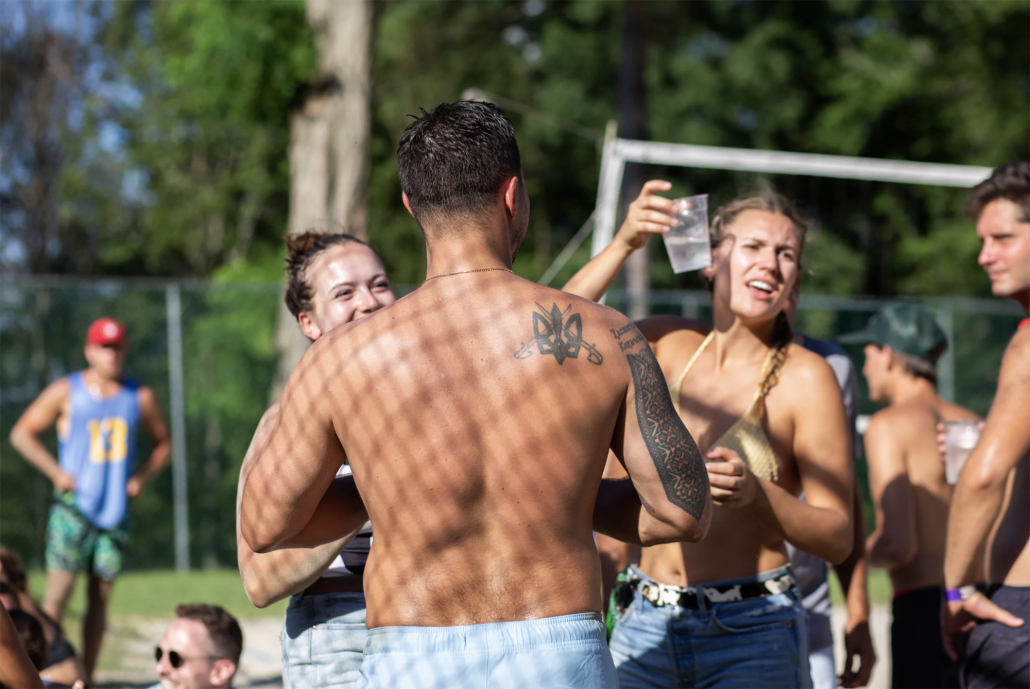
What’s really great about Ukrainians is that they are really everywhere and like to sport symbolism. I ran into a mom at the playground with a Ukrainian tattoo and learned her great grandfather was Ukrainian. If my mom sees someone with a Ukrainian bumper sticker she leaves them a nice note on their windshield. These distinct diasporic communities are all connected through scouting, dance, and festivals. Assimilation is inevitable, and it is something I struggle with and often feel guilt over, as not all of the traditions I grew up with are ones I want my children to simply reenact. I think often about how to pass on tradition in a way that feels meaningful, exciting, and true—rather than forced or performative.
Karen: The titles of your images are from a poem by Taras Schevschenko. Tell us why you chose to use his voice to help tell your story.
Andrea: Taras Shevchenko was a Ukrainian poet, writer, artist, public and political figure, folklorist, and ethnographer. He remains an iconic symbol of Ukrainians’ struggle for freedom. He lived during a brutal period of Russian imperial rule, when Ukrainian cultural life was heavily suppressed. His poems have been recited across generations.
I remember, as a grade-school child, having to memorize one of his most famous poems, Zapovit (Testament). In typical Soviet fashion, the whole class stood on a stage and recited it in unison. I was too young to fully understand its meaning, but I remember seeing my grandmother and many audience members wiping tears from their eyes as we repeated the words in a chant-like rhythm.
He was exiled for his patriotism and writing against serfdom. He loved his homeland dearly and made many sketches of 19th C Ukraine. He represents this fight for culture that has been part of Ukraine’s history forever and we are living through another version today.
The titles of the pieces come from a translated version of the poem “The Days Go By” by Taras Shevchenko from 1845:
Let Me Live
Let My Heart Live
Let Me Love
It’s about the desire for an awakening from the current state of exile, repression, and suppressed Ukrainian identity under imperial rule. I wanted to make something to reflect my despair that Ukrainains are still fighting, how helpless it feels to be an American right now and Shevchenko’s voice seemed like a good fit for my titles.
Karen: Artists as political activists have a long history. Your art practice bravely raises the voices and experiences of the Ukrainians to ensure that the stories of the Ukrainians are not erased from history. Have you experienced any threats or political push back for your art work ? (particularly in light of the Russo-Ukranian War (since 2014) and the Russian Full Scale Invasion of Ukraine (since 2022)).
Andrea: I haven’t experienced any push back so far. I think people are generally intrigued by how much Ukrainian culture exists outside of Ukraine. It’s gratifying that my work can be used to point to this important culture that we all are more familiar with due to the terrible, heinous full scale invasion.
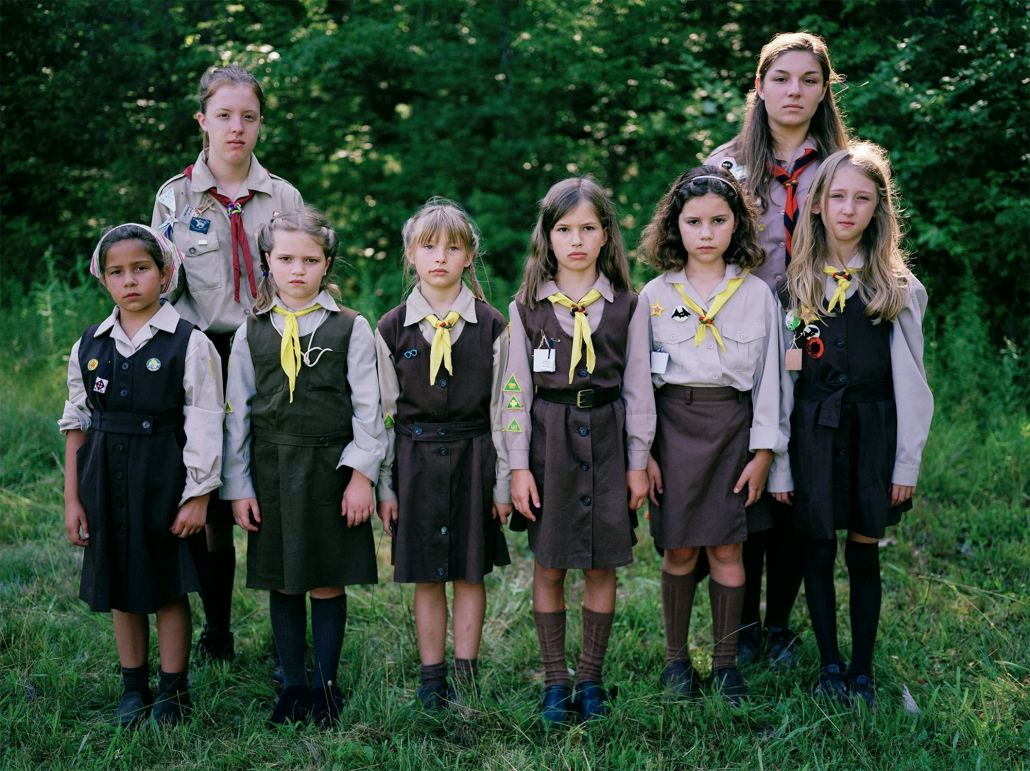
When my photographs from the Ukrainian summer camp were published by NPR, it revealed an interesting tension, as millions of people were suddenly viewing these images. In many of the photographs, the campers are not smiling. This was not because they were unhappy, but because, historically, when campers are in uniform, they do not smile for photographs. The camp itself was rooted in a tradition of preparing youth to resist r*ssian aggression. While children in the United States are not engaged in that reality, some of the customs and visual codes remain.
Many viewers strongly wanted the girls to smile and were upset when they did not. That immediate reaction was eye-opening, and it showed me just how powerful a photograph can be—and how quickly people project meaning onto an image.
Karen: The participants of this show are an organized crit group. Explain how this community of artists was formed and how it has impacted your process or your finished work.
Andrea: I am so grateful to our crit group for being a safe, dedicated and brilliant hive mind over the years. We all overlapped during graduate school and one billion thanks to Leah Gauthier for always organizing us and keeping the momentum. Since the SMFA was interdisciplinary, I value how we can talk about and support each other’s work over mediums. We can show or share anything and there is an inherent understanding that every step is vital to our practices. I am inspired by everyone’s work all the time! It keeps me going and makes me feel like I belong somewhere that makes sense.